About Men
Chapter 3: Mothers and Sons

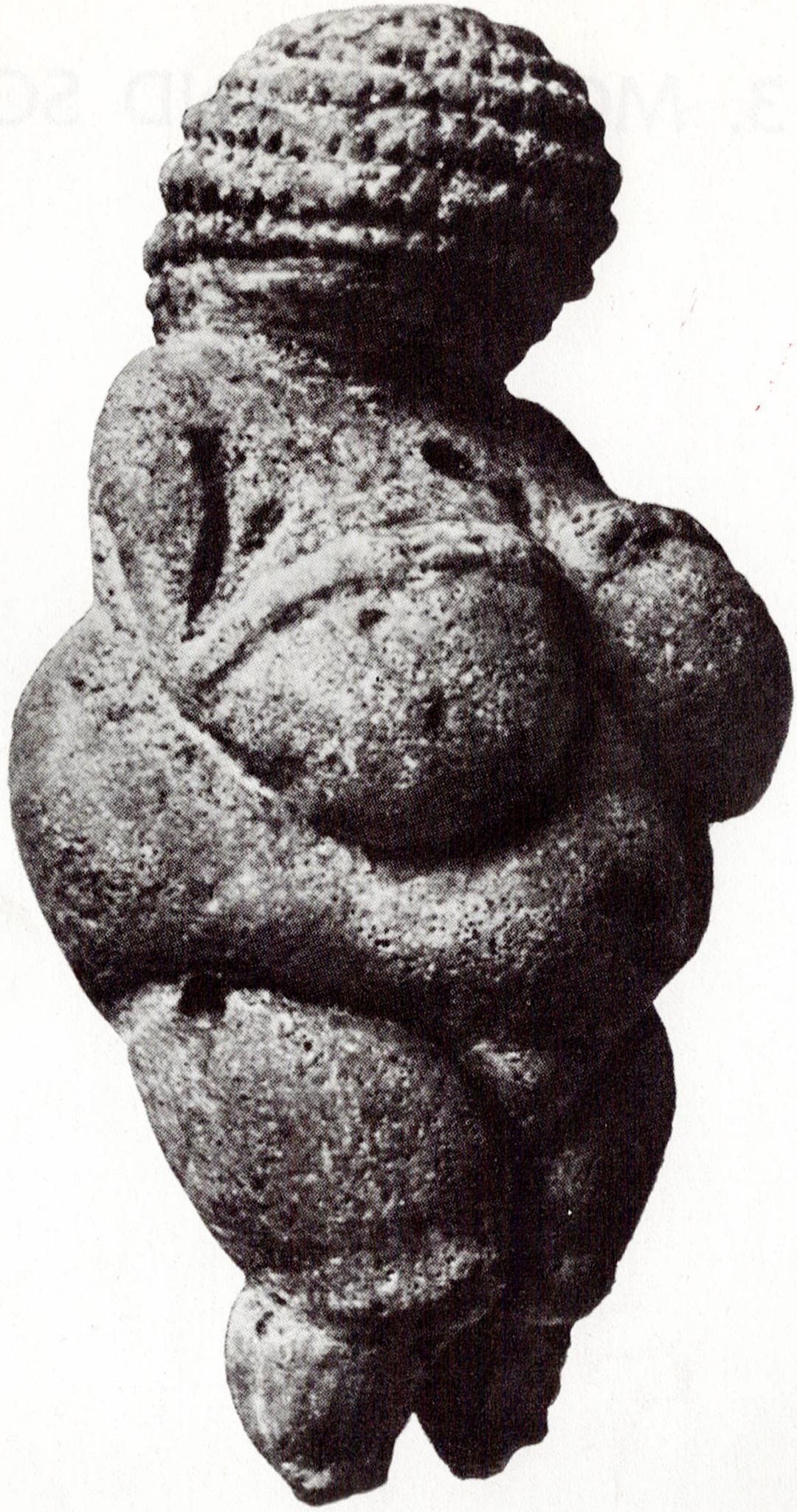

The Venus of Willendorf is one of the oldest discovered Mother Goddess or fertility goddess figurines. It is dated roughly 23,000 B.C. In the twentieth century Hans Bellmer, in his sculpture entitled Doll, shows us what has become of the Original Venus-Mother. She is now called “Doll.” Her breasts are hoisted to a shiny breaking point. They are not the breasts of a nursing woman. She is a headless torso, unable to walk—not by time’s exigencies, but by sculptor’s fiat.
Bellmer has done many sculptures and paintings of female torsos, all mutilated, headless, often hanging upside down from trees, in crucifixion poses, often with virginal bobby socks and patent leather sandals on their feet.
Last Exit to Brooklyn
...the 10 or 15 drunks dragged Tralala to a wrecked car in the lot on the corner of 57th street and yanked her clothes off and pushed her inside and a few guys fought to see who would be first and finally a sort of line was formed everyone yelling and laughing… and more came maybe 40 maybe 50 and they screwed her and went back on line and had a beer and yelled and laughed and someone yelled that the car stunk of cunt so Tralala and the seat was taken out of the car and laid in the lot and she lay there naked on the seat… and she drank flipping her tits with the other hand and they all laughed and Tralala cursed and spit out a piece of tooth and they laughed and yelled and the next one mounted her and her lips were split this time and the blood trickled to her chin and someone mopped her brow with a beer soaked handkerchief and another can of beer was handed to her and she drank and yelled about her tits and another tooth was chipped and the split in her lips was widened and everyone laughed and she laughed and she drank more and more and soon she passed out and they slapped her a few times and she mumbled and turned her head but they couldn’t revive her so they continued to fuck her as she lay unconscious on the seat in the lot and soon they tired of the dead piece and the daisy-chain broke up... and the kids who were watching and waiting to take a turn took out their disappointment on Tralala and tore her clothes to small scraps put out a few cigarettes on her nipples pissed on her jerked-off on her jammed a broomstick up her snatch then bored they left her lying amongst the broken bottles rusty cans and rubble of the lot and Jack and Fred and Ruthy and Annie stumbled into a cab still laughing and they leaned toward the window as they passed the lot and got a good look at Tralala lying naked covered with blood urine and semen and a small blot forming on the seat between her legs as blood seeped from her crotch...
Hubert Selby, Jr., “Tralala,” Last Exit to Brooklyn
Lady of the Beasts
What have they done to you?
Barbara Gobel, described by her jailors
as “the fairest maid in Wurzburg,”
burned 1629, age nineteen.
Frau Peller, raped by Inquisition torturers
because her sister refused
the witch judge Franz Buirman, 1631.
What have they done to me?
Sister Maria Renata Sanger, sub-prioress
of the Premonstratensian Convent of Unter-Zell,
accused of being a lesbian;
the document certifying her torture
is inscribed with the seal of the Jesuits,
and the words Ad Majorem Dei Gloriam—
To the Greater Glory of God.
What have they done to us?
Emerzianne Pichler, tortured and burned together
with her two young children, 1679.
Agnes Wobster, drowned while her small son was forced
to watch her trial by water, 1567.
Veronica Zerritsch, compelled to dance
in the warm ashes of her executed mother,
then burned alive herself, 1754,
thirteen years old.
Frau Dumler, boiled to death in hot oil
while pregnant, 1630.
What have they done?
Robin Morgan, excerpts from “The Network of the Imaginary Mother,” Lady of the Beasts
Femicide
Mariko Sato (age 25): Stabbed, hacked and shot. Her body was stripped from the waist down, wrapped in a blanket and stuffed in a trunk in a San Francisco apartment.
Lucy Ann Gilbride (age 52): Slashed and clubbed to death in her home in San Rafael.
Cassie Riley (age 13): Beaten, stripped, raped, drowned, Union City.
Wary E. Robinson (age 23): Stabbed eighteen times by her boyfriend. “She called me a coward,” he said. “She said I was afraid to fight for my rights.” San Francisco.
Sonya Johnson (age 4): Raped and clubbed, possibly strangled. She was missing eleven days before her body was found and identified. San Jose.
Arlis Perry (age 19): Stabbed, strangled. Raped with altar candles in a church on the Stanford campus. She had been stripped from the waist down.
Maude Burgess (age 83): Left naked and spread-eagled on her bed, her arms and legs tied with sheets. A pillow slip had been pulled over her head. San Francisco.
Darlene Davenport (age 16): Stripped and hacked to death. Left in a parking lot in Oakland.
Excerpts from section on “Femicide” in Crimes Against Women: The Proceedings of the International Tribunal, Diana E. H. Russell and Nicole Van de Ven, editors.
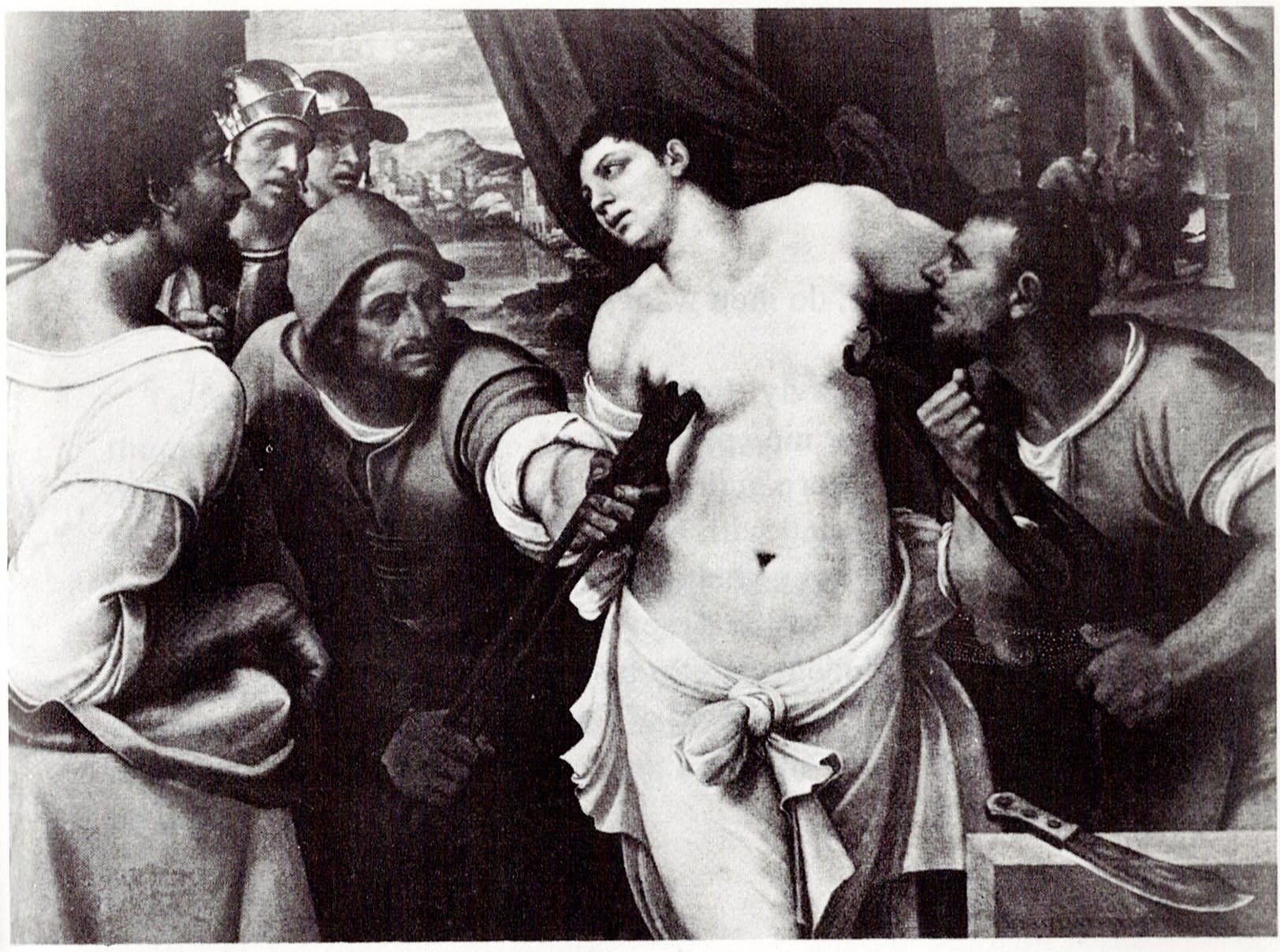
Hell hath no fury like a man spurned. . . . Agatha has been venerated as a third-century virgin martyr, from Catania, Sicily. Legend, which is controversial, has it that Agatha rejected the sexual advances of one Quintian, who then proceeded against her as a Christian. Her tortures included having her breasts cut off—and she is often depicted as carrying her bell-shaped breasts on a dish. Agatha became the patron saint of bell founders.
For those who would like to think that motherhood and the female body are truly cherished, here is a painting, one of the few imaginative “records,” shall we say, of the torture and murder of countless millions of women, whether as “Jews,” as “Christians,” as “witches,” or as the captured property of male enemies.
Agatha’s breasts—breasts that might ordinarily feed the human race—are being specifically mutilated by men who significantly show little emotion about what they are doing. They are not any more emotionally involved than twentieth-century bomber pilots over Asia are.
What do men want?
What, oh, what, do men want?
Their Mother’s Body: Eden’s forbidden fruit. For nine months they eat of it—and are born guilty. A son has already mated with his Mother, a son has already been sheltered and cradled in the arms of the Tree; a son is already blinded at birth: by his
mother’s blood. The blinding of Oedipus comes much later—and needlessly.
A mother’s son must avoid all that floods him with memory of Paradise, and of Paradise lost.
What, oh, what, do men want?
To forget, to deny, to relive: the rape, the dismemberment, the murder, of the original parent. Matricide, not Patricide, is the primal and still unacknowledged crime. Father-killing comes later, and need only happen once, if at all, to be remembered, regretted, resolved. Mother-killing must be repeated again and again and again: expiation for what cannot be undone.
Mother, mother, why have I forsaken thee?

Thus haunted, men invented the incest taboo. The erotic maternal: that ancient Goddess, that dangerous lover of her son-consort. Hot, hairy, huge—she is the dragon that sons must slay in order to become men. It is the Heroic thing to do.
The incest taboo. The leave-taking of Mothers, the abandonment of aging wives, the terror of heterosexual intimacy: the way in which men learn to murder the object of their original passion, the way in which men hide the signs of their first long meal.
The incest taboo. Sex, like murder, must be committed away from the Family of Man. Only in foreign territory must sons learn to strike: as forcefully as warriors, as mightily as gods, never exposing their bellies, never removing their armor. And when they are captured, sons must give away as little as possible: sons must deny, denounce, deceive—and flee in terror, when they can, from what they most desire.
The many vanishing acts of God and men: command performances all, an eternity of enforced escapes, a lonely, manly, wandering.
Often, when men embrace women, they report a feeling of suffocation. They flee in terror from the intimacy, they flee in terror from the possibility of becoming a father and of being trapped; they flee equally from the possibility that they will waste their sperm with no gain, no profit, no family security.
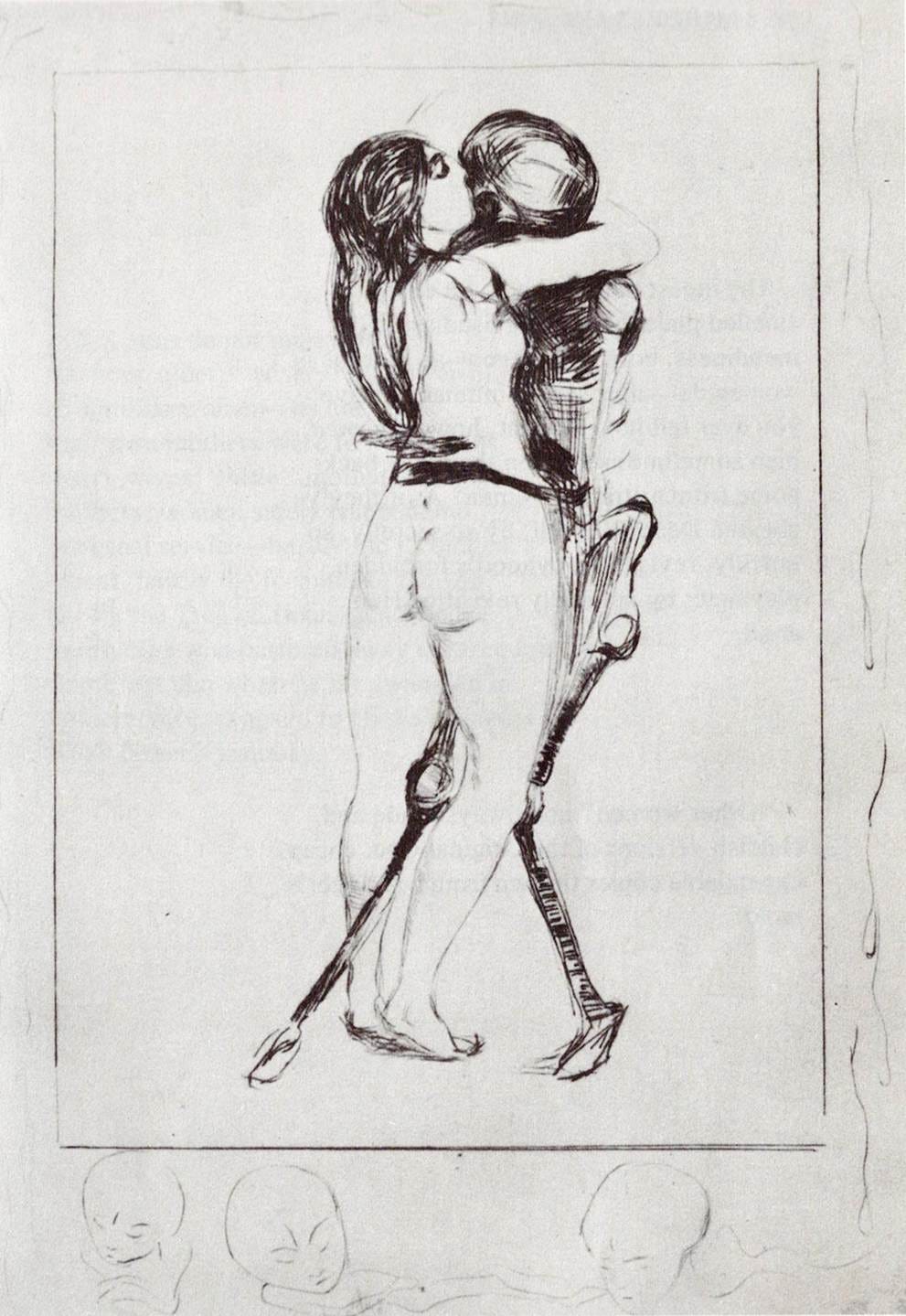
Men claim, in the voices of artists, that women represent death, that behind each seductive temptress, behind each virgin daughter of a wealthy father, lies the grinning skull of their own death. Yet I say, as Munch does in this painting, ah, how equally true is the opposite.
How often, how often, have mortal women embraced men and died in childbirth? How often have mortal women embraced men without becoming pregnant, or in becoming pregnant out of wedlock faced the death of social approval and protection? How often have women been forced into involuntary abortions due to poverty or male indifference? How often have women “paid” for the pleasure of children with loneliness, sexual and emotional deprivation, social death?
And how often do women find themselves in the arms of Death upon embracing men? Ghostly embryos and spermlike figures surround Munch’s vision of just this Embrace, each floating, disembodied, stillborn—never to be born.
The incest taboo. Have you ever celled male terror, disguised as moodiness, boredom, anger—as sharply as women do—after sexual intimacy? Have you ever felt how jubilant, how redeemed, men sometimes seem, on their way back home from a strange woman? As if they’ve cheated Death Himself, by so secretly, so quickly, revisiting boyhood’s forbidden playmate; by not really revisiting Her at all.
“Other women” are always crude and childish versions of the Original One: cheap, expendable copies thrown from a stranger’s mold.
No, sons do not marry their mothers: older, “wiser,” all-powerful, all-familiar women—as once their own mothers were to them. Sons marry wives: “little” mothers, strange mothers, women safely trapped into maternal service—hardly the forbidden breast, hardly the formidable Dragon, hardly the Tree of Sexual Knowledge, hardly She who bartered away her freedom to protect him when he lay swaddled in vulnerability, exposed to all the elements of his father’s jealousy.
When a wife grows “old”—as old as mother once was—a man must tounce his interest in Her once again. Only the blood of strange women, the blood of ever-younger women, can be pursued without incestuous guilt.
It is redeeming, it is very Biblical, for a man to have sons in his old age.
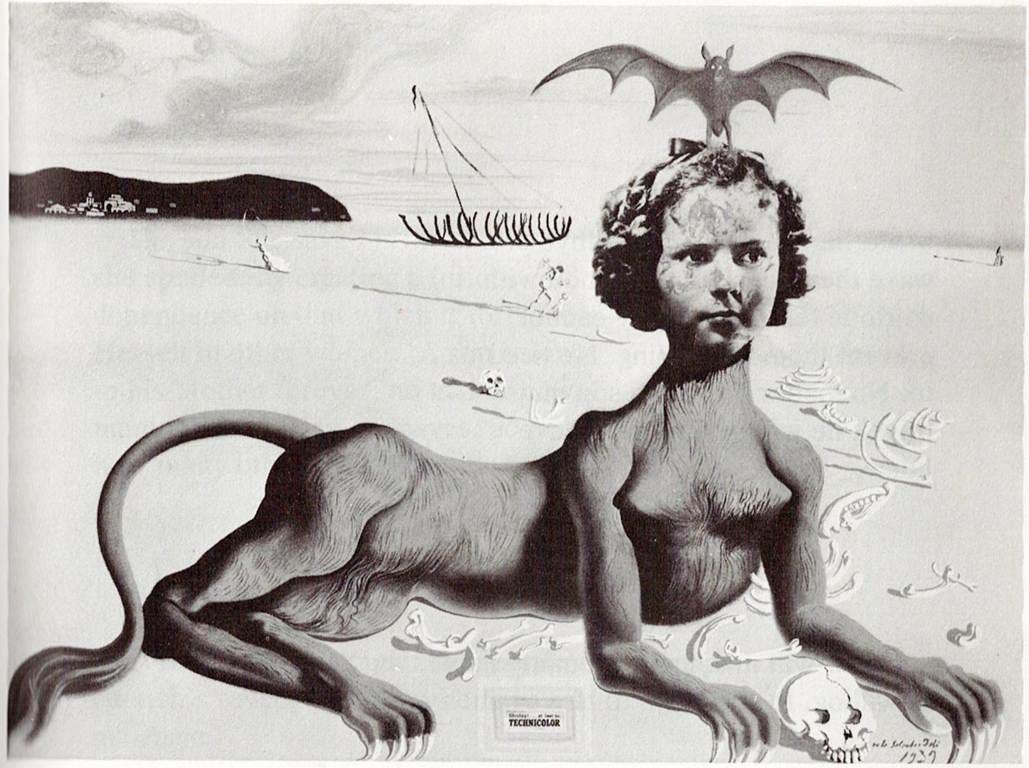
Dali’s Shirley Temple, child-actress, child-virgin, is depicted not as Nabokov’s Lolita, but as the Sphinx, as Kali, as dangerous to men especially in her innocence. This female child reigns over a death landscape of skulls, bones, a bat—a ship wrecked long ago. Here, we are not far from the increase in child prostitution and in child pornography magazines and movies-for commercial profit. Very little girls are already seductive and dangerous: because when they grow up they can reproduce the species. But all life dies: therefore, women can produce only corpses, women are the producers of death and therefore men must create religious ideologies that ensure or at least promise immortality and true life after death.
Mothers may weep goodbye or wave their sons into manhood with patriotic fervor, but they cannot prevent them from going. No need to. No matter how far a son may travel, he will never really leave home.
Never will man find a woman as able, as willing, to give birth to him again.
The son She saved is the son she spoiled: by creating a furious dependence on that which is forbidden— Herself in other women. A son belongs to his Mother forever, no matter how many other women he leaves, no matter how many other women he stays with.
Curious, subtle, tragic: this female eunuch’s revenge, this mother’s truest marriage.
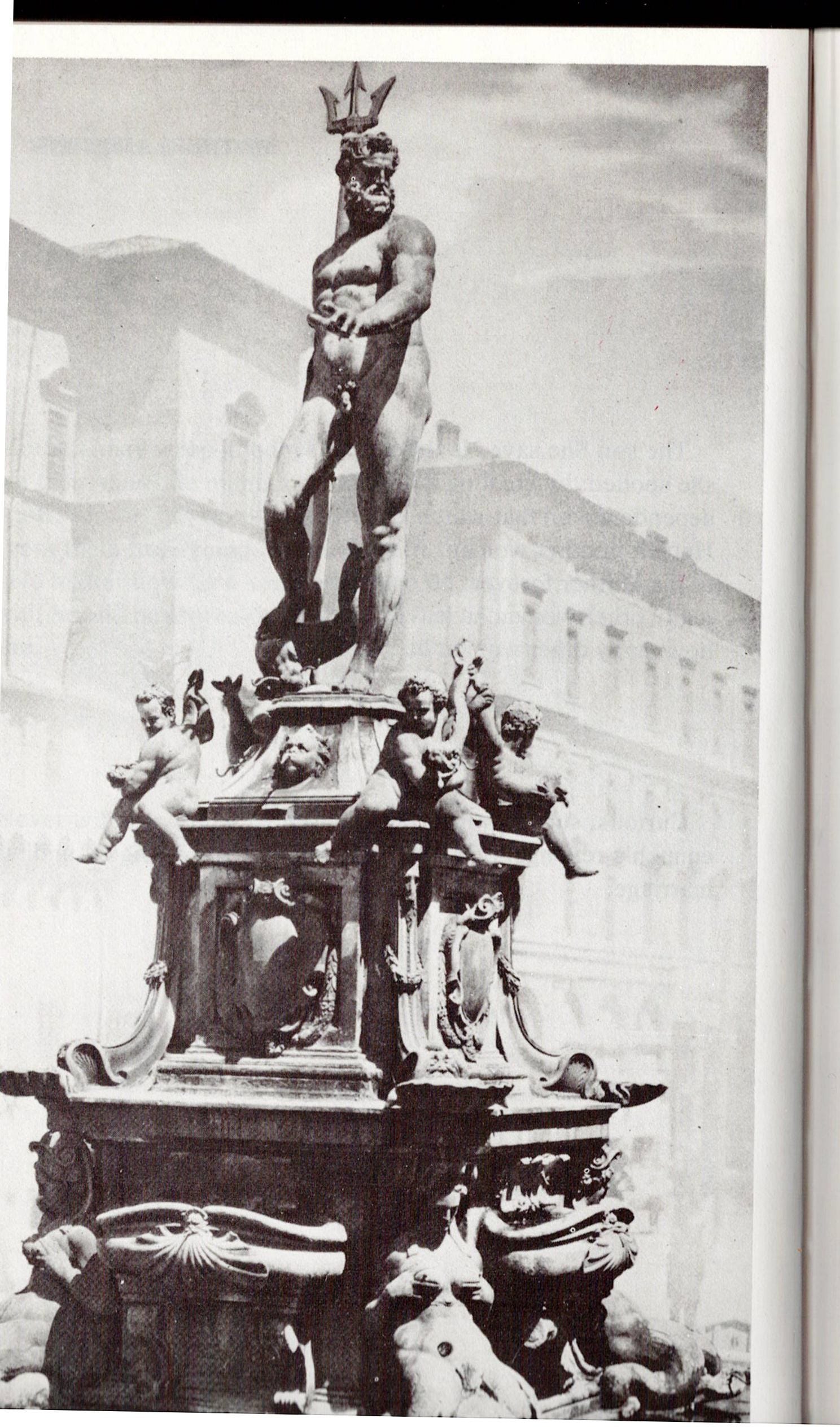
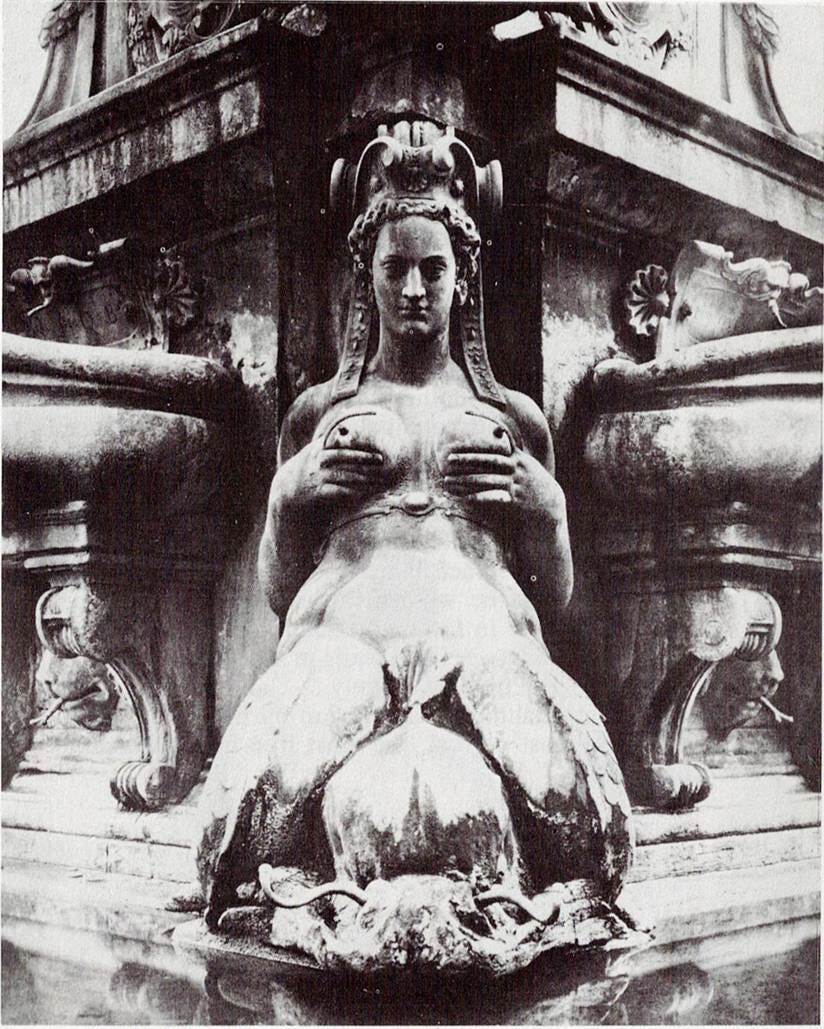
To me, this mermaid, this sexually explicit, ancient goddess-like figure is beautiful: commanding, powerful, sensual, sexual. Notice her place: as one of four women at the base of the Neptune statue.
Neptune, or Poseidon—and I personally was extremely moved by the temple to him at Sounion, in Greece—is, like most resplendent patriarchs, being held up by the labor of women, by women whose former power and current work remains unnoticed.
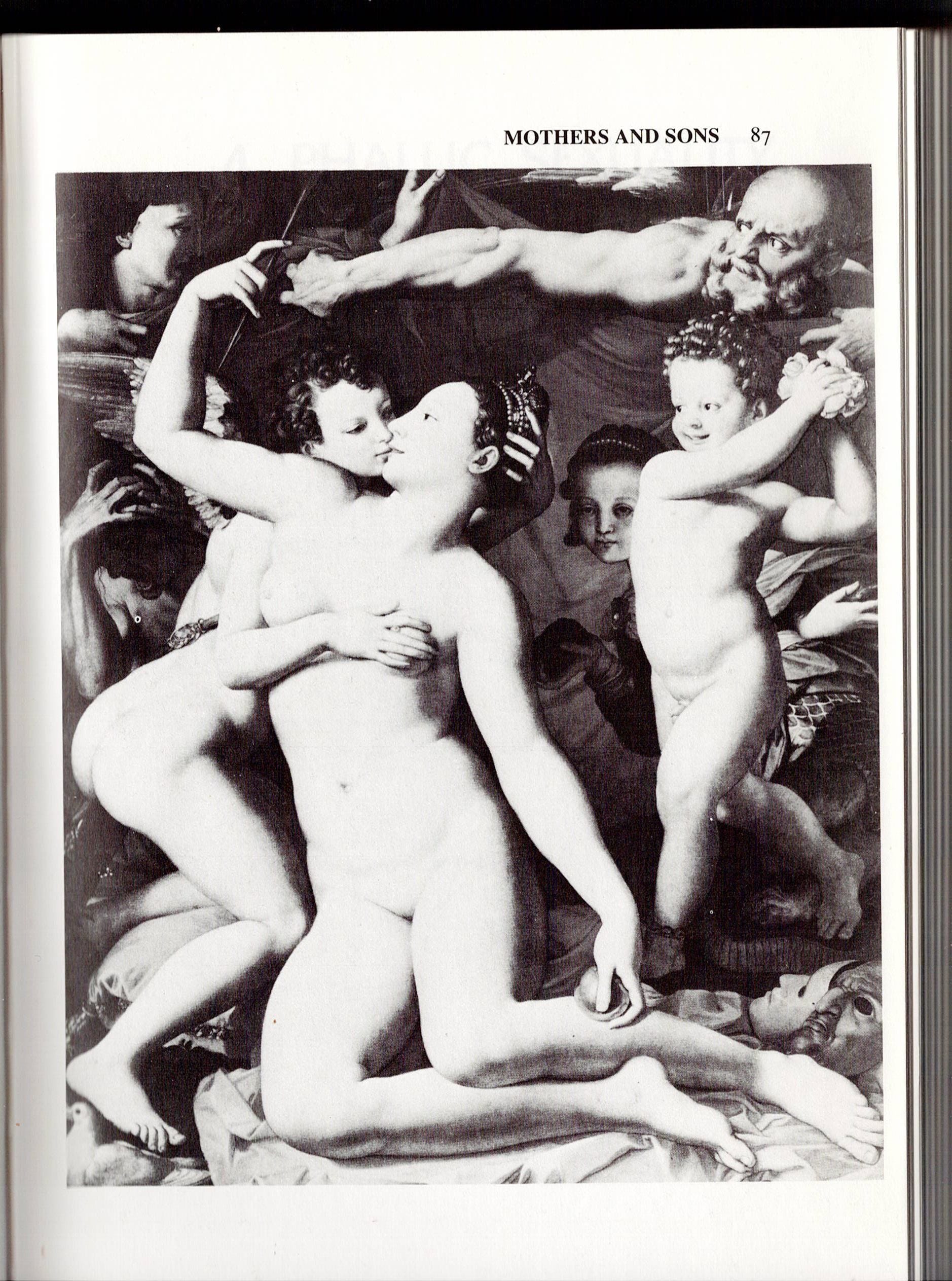
Bronzino’s Allegory is the best painting I could find that depicts a truly erotic contact between a mother-figure (an “older” woman) and a son-figure (a “younger” boy or potential consort). Mother-son incest in real or surrogate forms occurs very rarely and is highly taboo. If fathers were once “replaced” by sons for erotic or reproductive purposes, then part of male-bonding or father-son truce would be based upon giving up the right to the Mother; this would also avoid rivalry and competition for her, and the presumed replaceability of older man by younger man. Under patriarchy, it would be women, not men, who would be “replaced” or interchangeable. In fact, father-daughter incest is the dominant psychosexual model between the sexes in modern society.
Bronzino’s Venus and Cupid are lovely . . . and as Freud said: “A mother is only brought unlimited satisfaction by her relation to a son; that is altogether the most perfect, the most free from ambivalence of all human relationships.”
whew! i felt literariized... i jumped right back into the 60's, academia, womens lib with real feminists. the angst, the anger, the hate... guitar, wine, pot... and we were so smart: we knew it all...
You leave me in awe.