About Men

Long, long ago, in 1977, I wrote a book titled About Men. I published it in 1978, almost 50 years ago. I tentatively titled it “All About Men.” Some publishers refused to believe that anyone could write a book about men, not to mention “All” about them. I stooped to conquer. I shortened the title. At the time, many feminists refused to read it. Why was I taking any time to focus on the “other” sex? But it was very widely and positively reviewed...for what that’s worth. In my view, only the first two major chapters hold up. The rest of the book--well, the author is not impressed. What I’m posting is only two of five “chapters,” which comprise the first section.
The first section, “Male Images: Reflections of Eden,” consists of five subject areas and is accompanied by photos of many paintings and sculptures, all with accompanying text. I recently glanced at it and was amazed, impressed, humbled. I titled them “Fathers and Sons” and “Womb-less Men.” It proved too difficult to post the photos adjacent to the text, which is how they appear in the book. Instead, I’ve placed them at the top of each relevant passage.
What amazed me is that, at the time, I had very little Torah knowledge, practically nothing at all. My beloved chevrutah, Rivka Haut z”l, read it and said that it was a Midrash on Bereshit. Now, 36 years later, I begin to see what she may have seen. This is all unedited.
FATHERS AND SONS
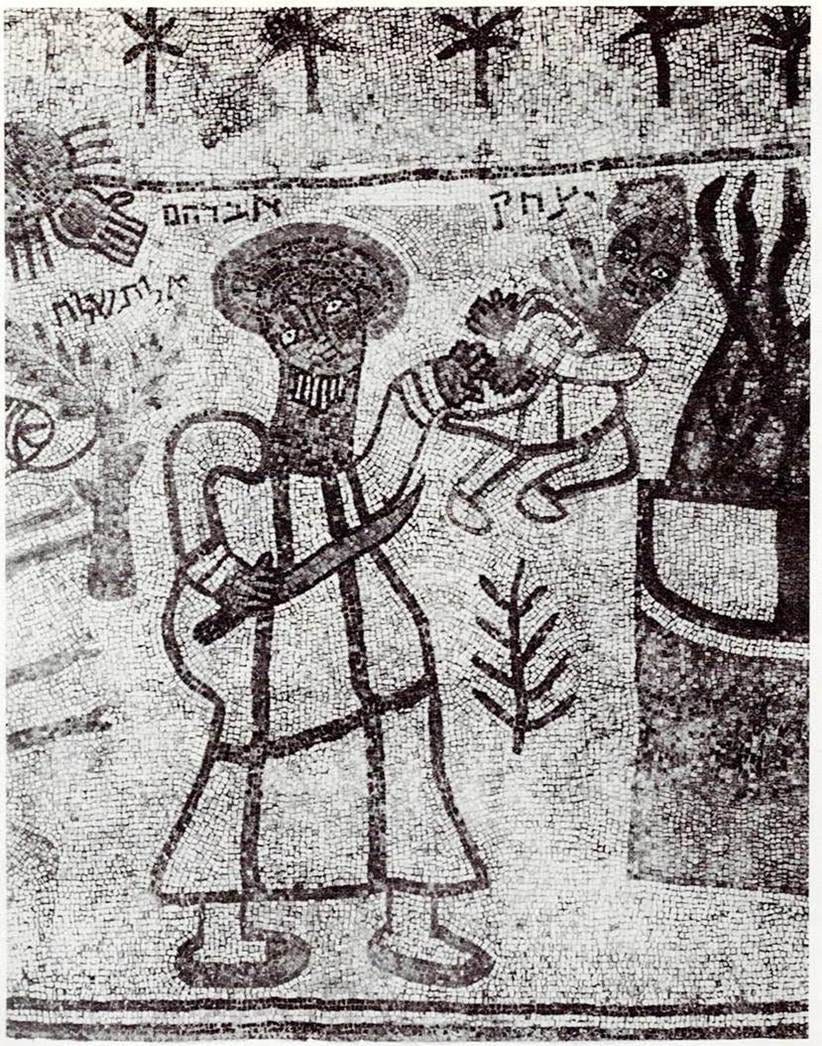
Take now thy son, thine only son Isaac, whom thou lovest, and get thee into the land of Moriah; and offer him there for a burnt offering upon one of the mountains which I will tell thee of. . . .
And Abraham stretched forth his hand, and took the knife to slay his son.
And the angel of the Lord called . . . And he said, Lay not thine hand upon the lad, . . . for now I know that thou fearest God, seeing thou hast not withheld thy son, thine only son from me.
Genesis 22:2, 10, 11, 12
Thou shalt not delay to offer the first of thy ripe fruits, and of thy liquors: the firstborn of thy sons shalt thou give unto me. Exodus 22:29
In his days did Hiel the Bethelite build Jericho: he laid the foundation thereof in Abiram his firstborn, and set up the gates thereof in his youngest son Segub, according to the word of the Lord, which he spake by Joshua the son of Nun.
I Kings 16:34
Will the Lord be pleased with thousands of rams, or with ten thousands of rivers of oil? shall I give my firstborn for my transgression, the fruit of my body for the sin of my soul?
Micah 6:7
Unknown. Abraham Sacrificing Isaac
This mosaic, from a sixth-century synagogue floor in Israel, is wonderfully clear. Little Isaac looks as if he is trying to escape. Despite the widespread custom of sacrificing the firstborn male son to God (or gods) in the Middle East, this firstborn child wants to live. In fact, the nonsacrifice of Isaac is the first clear precedent against human sacrifice in the Old Testament.
It is important to note that Isaac is a “miraculous” first and only child, born long after his mother Sarah’s childbearing years are over. Yet she, the mother, is not consulted, by man or God, in this matter of her son’s death as sacred sacrifice.
The practice of human and child sacrifice is continuously referred to and prohibited throughout the Old Testament: twice in Exodus and quite clearly in Joshua, in Judges, in I and II Kings, in Micah, in Chronicles, in Jeremiah, and in Ezekiel.
HAEMON
Father, I am thine, and thou, in thy wisdom, tracest for me rules which I shall follow.
CREON
Yes, this, my son, should be thy heart’s fixed law—in all things to obey thy father’s will. He who begets unprofitable children—what shall we say that he hath sown, but troubles for himself and much triumph for his foes? Sophocles, Antigone
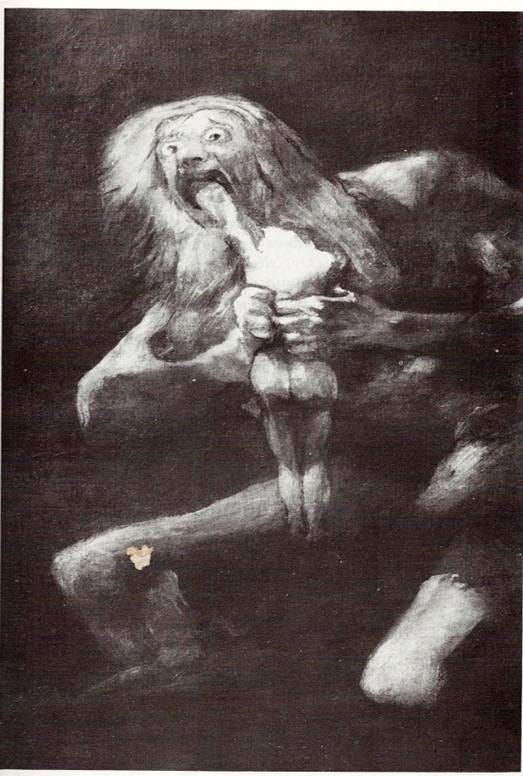
Francisco Goya. Saturn Devouring His Son
Goya’s painting of father-son cannibalism is ferocious, terrifying, ani somehow “unnatural.” We are more used to seeing or hearing about mothers, not fathers—Goddess Monsters and not Godfather Monsters—who “devour” their sons.
Saturn, or Cronus, is the legendary Father of all the Greek and Roman gods. Like other legendary fathers, he has been warned that one c his many sons will overthrow him. He proceeds to kill, cannibalize, an devour them all, one by one. Only Zeus—or Jupiter—whose mother hides him, survives.
A son’s rebellion against the arbitrary rule of mothers is understandable. What is puzzling and tragic, however, is the child’s irrational and submissive flight into the arms of a father-god whose ability to tyrannize or “devour” his young son or daughter is as great as, if not greater than, anything a mother can do or has already done. For men to den being wounded or victimized at all by fathers, by father figures, or t male tyrants, is psychologically dangerous: as dangerous as it is fi men to deny the powerful psychic hold that mothers once had—or still have—over them.
Coming to terms with paternal ambivalence, hostility, or abandonment is what sons are now doing on a worldwide scale. To resolve this ancient and usually unconscious quarrel—without endangering the survival of the planet—is a major task of the next decade.
For me you took on the enigmatic quality that all tyrants have whose rights are based on their person and not on reason.
I was, after all, weighed down by your mere physical presence. There was I, skinny, weakly, slight; you, strong, tall, broad. I felt a miserable specimen, and what’s more, not only in your eyes but in the eyes of the whole world, for you were for me the measure of all things. What must be considered as heightening the effect is that you were then younger and hence more energetic, and that you were, besides, completely tied to the business, scarcely able to be with me once a day, and therefore made all the more profound an impression on me, never really leveling out into the flatness of habit.
What was always incomprehensible to me was your total lack of feeling for the suffering and shame you could inflict on me with your words and judgements. It was as though you had no notion of your power.
How terrible for me was, for instance, that: “I’ll tear you
apart like a fish”. It was also terrible when you ran around the table, shouting, grabbing at one, obviously not really trying to grab, yet pretending to, and Mother (in the end) had to rescue one, as it seemed. Once again one had, so it seemed to the child, remained alive through your mercy and bore one’s life hence forth as an undeserved gift from you.
Franz Kafka, Letter to His Father
I can’t dislike you, but I will say this to you: you haven’t got long before you are all going to kill yourselves . . . I am only what lives inside each and every one of you . . . My father is the jailhouse. My father is your system . . . I am only what you made me. I am only a reflection of you . . . I have at out of your garbage cans to stay out of jail. I have wore your second-hand clothes. . . I have done my best to get along in your world and now you want to kill me, and I look at you, and then I say to myself, You want to kill me? Ha! I’m already dead, have been all my life. I’ve spent twenty-three years in tombs that you built . . . These children, everything they done, they done for the love of their brother. . . You expect to break me? Impossible! You broke me years ago. You killed me years ago. . .
Charles Manson, under legal examination. From Vincent Bugliosi and Curt Gentry, Helter Skelter
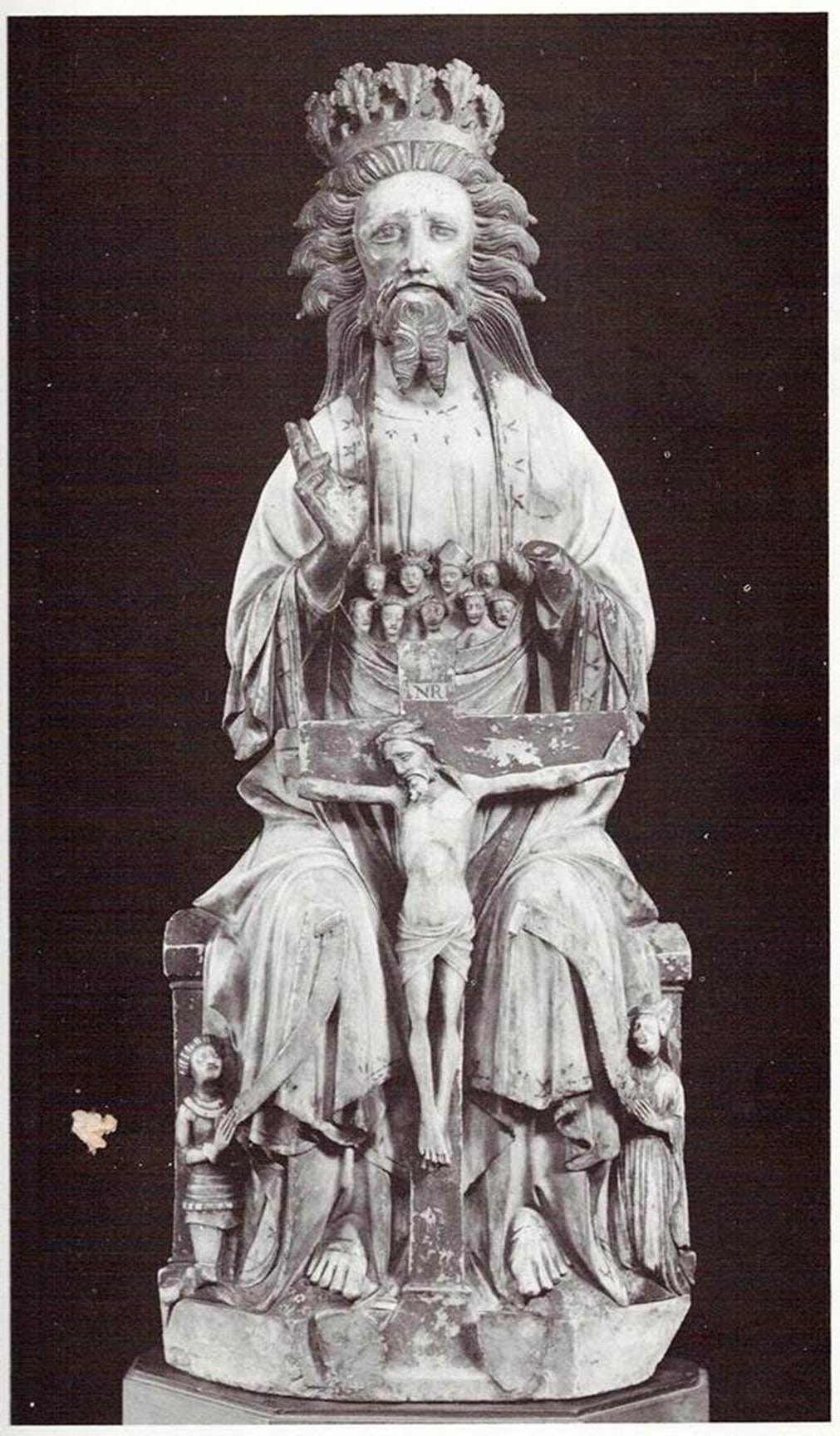
Unknown. Majesty
In Majesty we see a Catholic depiction of father-son violence.
The themes of paternal infanticide and cannibalism that I’ve suggested as an alternate or parallel interpretation of the myth and sin of Eden clearly originate in pagan and Biblical times, but clearly they also initiate and dominate the Christian era.
Jesus Christ, a Jew, God’s son on earth, is sacrificed by and to God willingly, in an unusual show of adult filial obedience. Christ’s ascension signifies a new era of father-son relations, a widespread triumph of patriarchal will and exclusive male responsibility for spiritual and public matters. Christ’s purpose is novel: to redeem all men from original sin, to ensure the possibility that all men enter the Kingdom of Heaven.
In churches at communion, Christ’s body is again eaten in the wafer, his blood symbolically tasted in the wine. In so familiar and so sanctified a ritual, we are meant to forget the bloodiness of the original deed, the basically high price we pay for our illusion of redemption. Especially, we are meant to forget that a father has killed or allowed a son to be killed.
Goya, in his “black period,” portrays a pagan male father-god literally eating, devouring, his son. It is a dreadful and frightening sight. Yet few are filled with nausea and trembling upon entering a church, or upon viewing crucifixion scenes in every museum in the Western world.
Children’s bones: lying on temple altars, immured in public buildings, floating down Egyptian rivers, wind-bleached on all the mountaintops of China, Greece, Africa.
The Bible is haunted by the ghost of a missing son, a firstborn son, a most-beloved son: a murdered son. The Last Son, sacrificed by his father, God.
A father who kills his son kills his own lifeline: a case of the Head that ate its own Tail. Such a man acts as if he will live forever, as if he were God—or an animal. For this, man was doomed to die; for this, man was doomed to live, knowing he would die.
Even Abraham had to be taught that an animal could serve his purpose instead.
The Tree of Male Begats: a remarkable acknowledgment of paternal responsibility, a first, stunning blow dealt the crime of infanticide. A record of the sons who made it.
And Adam lived an hundred and thirty years, and begat a son in his own likeness, after his image; and called his name Seth:
And the days of Adam after he had begotten Seth were eight hundred years.
Genesis 5:3-4
How explicit. How literal. Eight hundred years—hardly forever—but far longer than one hundred and thirty years.
Consider: if it were natural for fathers to care for their sons, they would not need so many laws commanding them to do so. Fathers would not have to be tempted into it by offers of immortality, empire, or God’s love.
Paternal infanticide and cannibalism—the most original of sins.
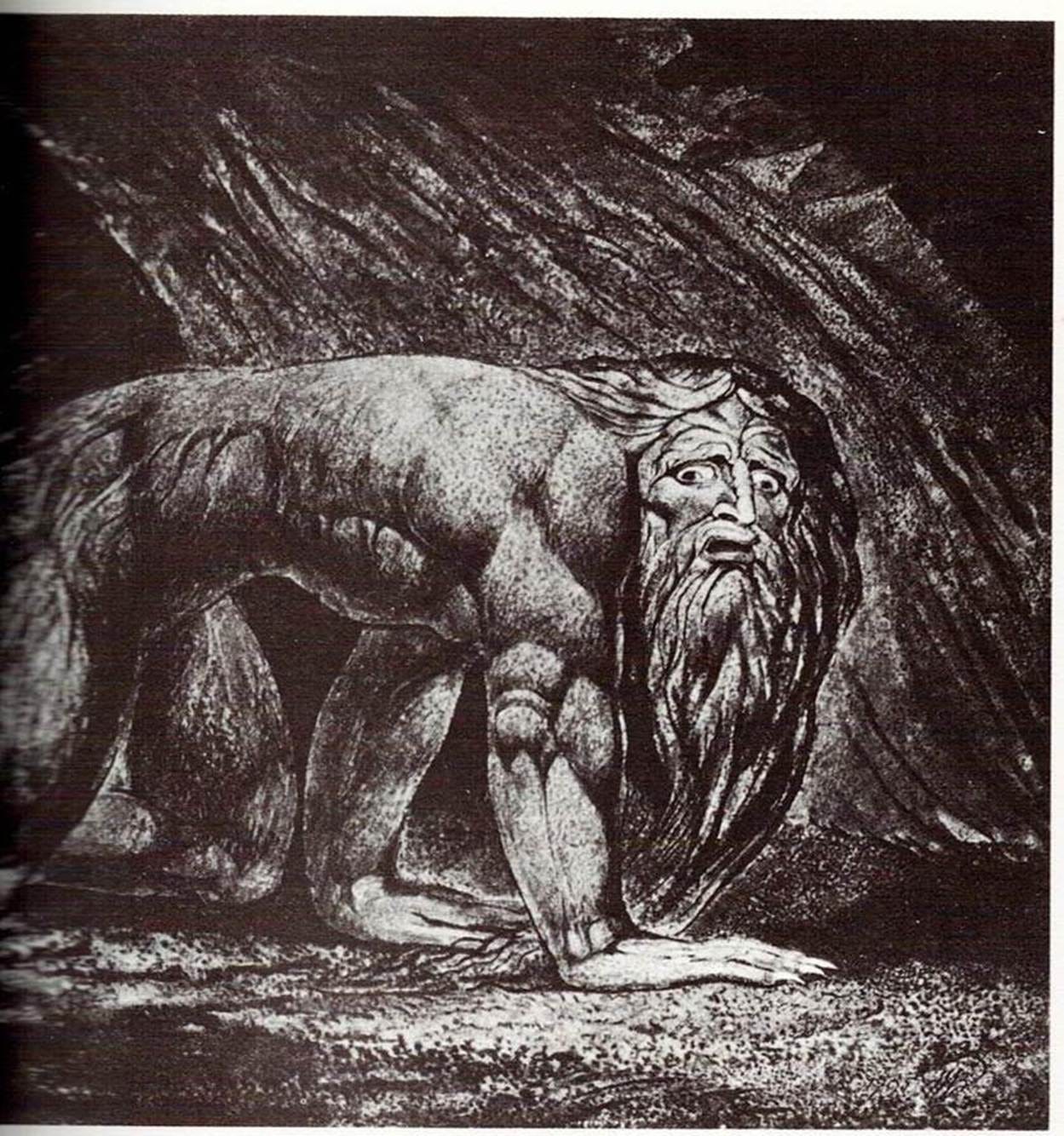
William Blake. Nebuchadnezzar
Blake’s painting of the “maddened” King Nebuchadnezzar captures the haunted, damned, and frightened look that I imagine fathers would have after beating or killing a child. It is the male saint as beast; the male King as crazed.
— Did Adam look this way? Did Orestes, who murdered his mother, look this way? Are such deadly original sins so unredeemable that men have needed to project Original Sin onto women, sensing that it is not within their psychic powers to live with such guilt; sensing that it is not within their powers to expiate such guilt without the miracle of Christ, without Mary’s mercy?
A first child, a son. He who opens the virgin’s womb is the thing most longed for, the thing most feared. The reminder of one’s own death, a self-replacement—an extra mouth to feed.
One son said: “My father never wished me dead. I am very much like him— in fact, it was I, all along, who longed for his death.”
Enter Oedipus. Exit Laius. How easily we forget that it was Laius, the father, who commanded his son’s death; how easily we forget that Oedipus fled his adopted home lest he kill his adopted father; how easily we forget that Oedipus hesitated to defend himself against the stranger’s attack—the stranger on the road: his true father.
Even now, when fathers kill their sons—at home, at war—the psychologists say, “Oh, but the father really meant to kill his own father, the child’s grandfather. It was only a case of mistaken Oedipal identity.” Young soldiers lie dead, sent there by commanding father-figures. How proud, how sad their fathers are: their fathers who never meant them any harm.
Freud, the Father of Oedipal interpretation; Freud, who bequeathed me the net of opposites in which to catch the truth; Freud, the son, could no more remember the terror of father-violence than could Freud, the father, admit to such deeds.
Only yesterday, I asked a male psychiatrist to tell me about the male fear of male violence. He said that that wasn’t the problem at all. No, what really frightened him were the gangs of teenage girls who took up the whole sidewalk! No, he said, lighting his pipe, it is women that men fear most of all.
Oh. And slowly I began to understand that father-wounded sons never recover, never confess, never remember; slowly, I began to understand why women can never satisfy the longing of boys who are love-starved for their fathers; why women can never exorcise the grief of men, lured by their fathers into wanting the impossible: revenge, reunion, redemption. God Almighty’s benevolent protection: against other men, against the original female parent, a magic male amulet, a son’s shield against the rising hot shame of childhood vulnerability.
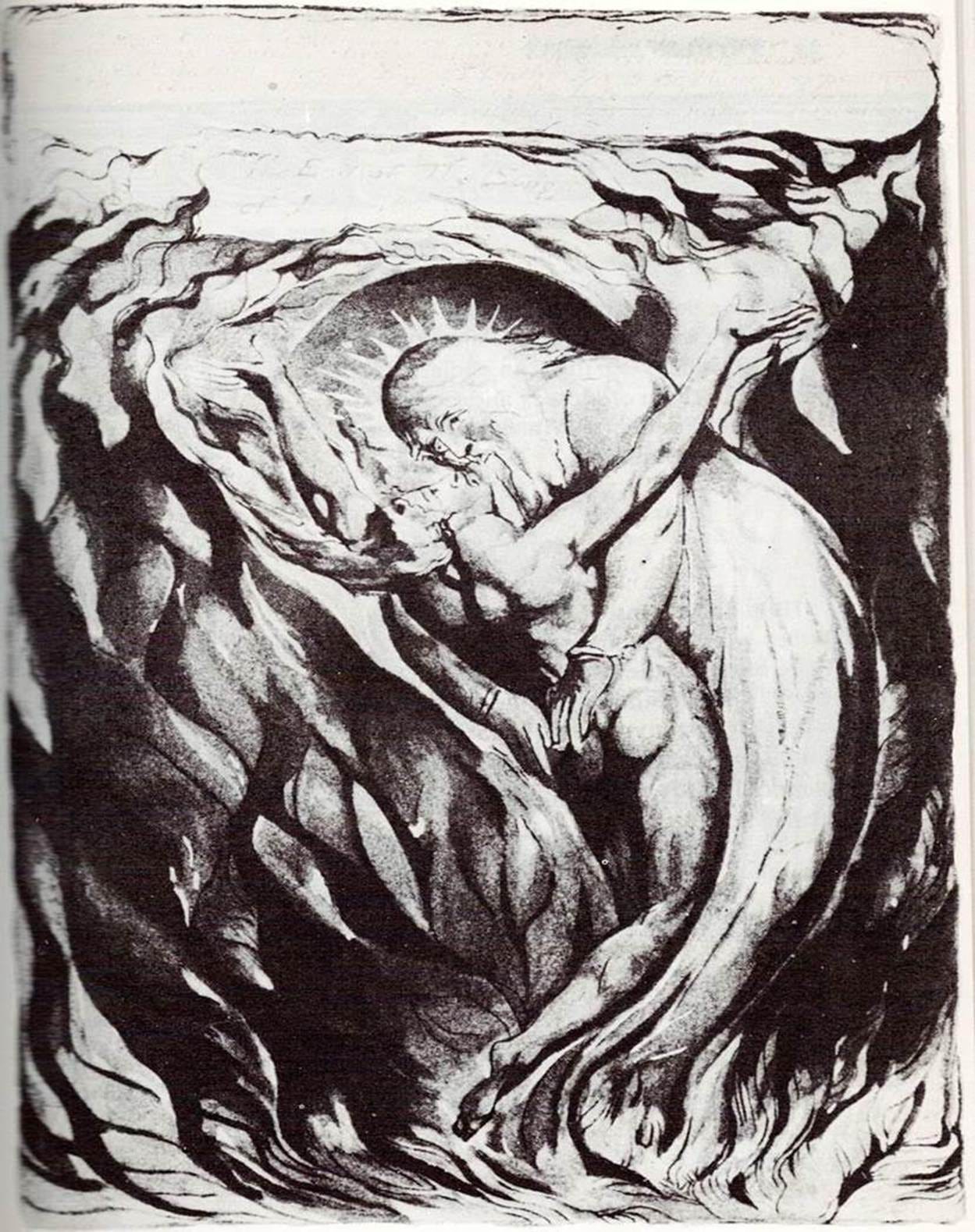
William Blake. The Soul Reunited with God
In this extraordinary painting by William Blake, we see one of the rare depictions of a deeply repressed male psychological desire: the reunion of son with father, of man with God.
Blake’s Soul shows us how male infants raise up their arms in joyous, trusting, expectant submission—usually to mother-figures; here, to the father-figure. Is there something less shameful, to men, in the image or in the reality of men submitting to other men? Is it somehow less feared, more noble, to be bested or enslaved by “superior” men—better than it is to be bested by “inferior” woman?
Blake’s Soul is the male notion of transcendence, of spirituality, of redemption, and reunion. There is no woman anywhere. In a sense, this is an extreme representation of the unmet yearnings of mortal sons for immortal and omnipotent father-gods, perhaps because their earthly fathers have failed them so, or because their earthly leaders have failed them so.
To me, the mating is homosexually erotic and is a complete denial of the role of woman as Mother, as Healer: She whom sons would yearn to be reunited with, if they were allowed to feel this yearning without fear of father reprisal. Do sons wish to mate with their fathers? Is the shame of their abandonment by fathers so great that the “Oedipal dilemma” can only be “resolved” through prohibited erotic means—and then only in a “spiritual” sense which excludes woman entirely? If so, how cruel the cultural taboo, the cultural disgust, for male homosexuality. And how equally cruel for women is our exclusion from unpunished sexual practices; how cruel is our exclusion from authority in public rituals of spiritual transcendence.
When a man kills a woman, he doesn’t mean to. Murder, men know, is an affair between men, an endless reversible chain of Heroes and Gods, Kings and Prisoners, Winners and Losers, Fathers and Sons.
Humiliated sons, forgotten sons, father-wounded sons: who else would have invented the Myth of a Virgin Birth? “My mother would never sleep with that petty tyrant, with that ordinary bully, my father.” My mother slept only with my True Father Who Art in Heaven.
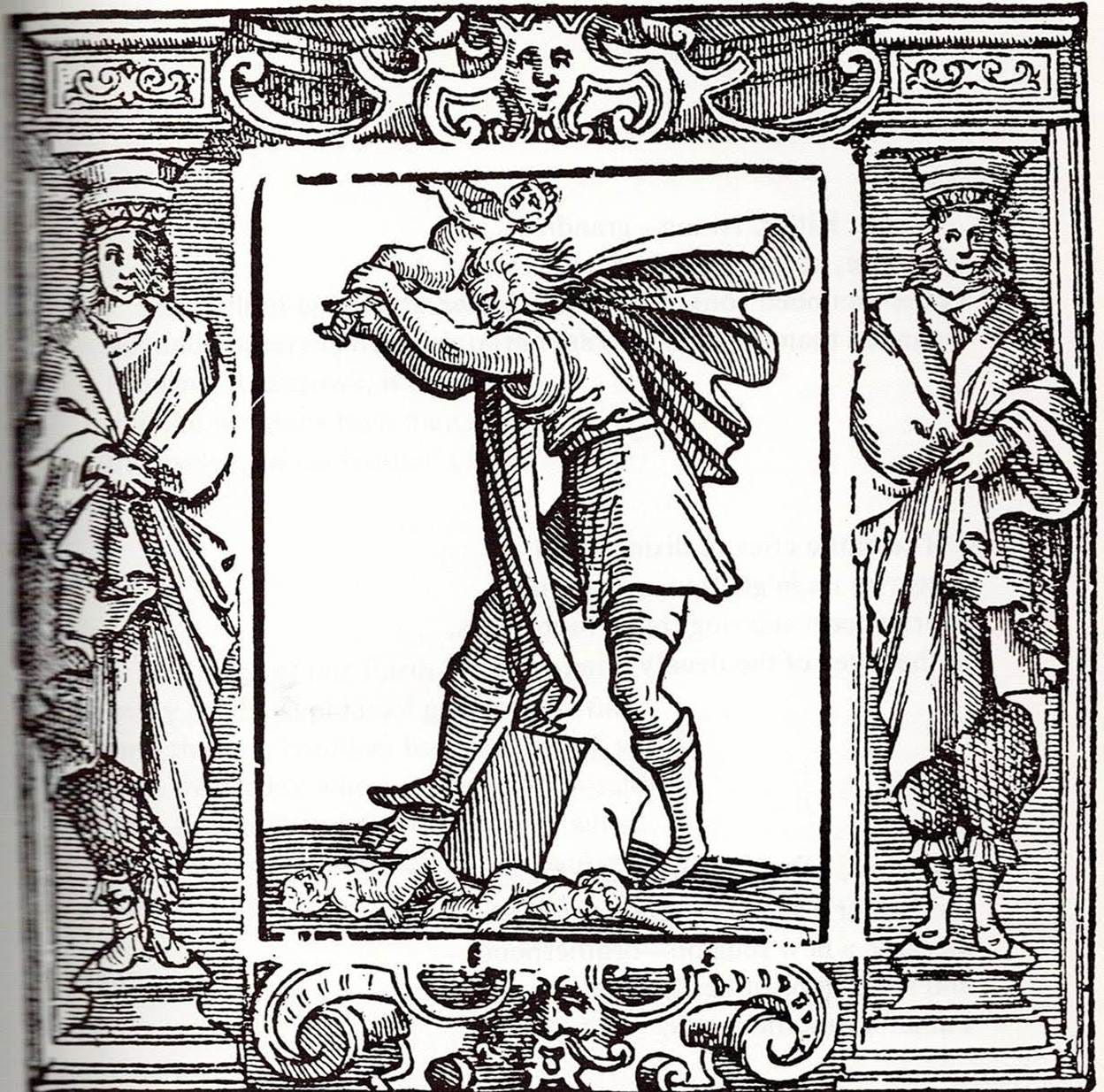
Cesare Ripa. Evil Thoughts
Here, a man is obviously dashing infants to their death, yet this woodcut is entitled Evil THOUGHTS. Even when the deed is shown to us so graphically, it is somewhat softened by giving it some other name.
Or, another way of looking at this: if a patriarchal God sacrifices His son, or daughter, it is for the Good of us all. Its purpose is “higher,” therefore holy—and somehow not really the bloody deed it is.
Stalin, Hitler, Nixon—grandiose, mediocre, paranoid, humiliated: classic father-wounded sons. Even more father-wounded than the men who submit to them.
The battle cries of disinherited Sons rise up in ghettos and colonies everywhere: starving, rebel barbarians, at the gates of the deadly King.
In fury, in hunger, they call for the Father’s sacrifice. They say: Let us make a new religion—brotherhood—and if blood must be shed, let it be the Father’s, not the Son’s.
The guilt of lamenting Sons and blinded Fathers is truly insupportable. It burns, it burrows, it explodes—like the weapons both men use to rid themselves of each other’s flesh.
The Face of our Earth is half eaten away by the syphilis of greed; cliffs fall into the sea, boulders have sprung up where only yesterday wheat fields grew. Wealthy men buy gold and move to Brazil, where, they have been told, the nuclear rays will strike last.
Boy-children roam my rooftops, leave smaller children mutilated, dead. What does a five-year-old corpse understand about Malcolm’s chickens come home to roost? No more than the large-eyed deer, shot ten times dead by the man in the flabby plaid shirt understands. No more than the woman just raped to death by soldiers understands.
No more than I understand what draws men to sit together these many centuries, chewing over each piece of the Primal meal, unable to relinquish—or recognize—the taste of their own flesh . . . these deeds of cannibalism, these famous Last Suppers embroidered in gold thread on velvet.
Mine is the century of Death. Mine is the century of male-birthed children, precocious with radiation.
Man’s Son, Manson, is convinced that he, not Rockefeller, should be King. The Son has come to slay the Father. The Resurrection of the Sacrifice. The Second Coming.
I wonder if the Fates still sit at their work—or have they left their tapestry undone, for good: the needle, the thread, dangling, the whole unraveling?
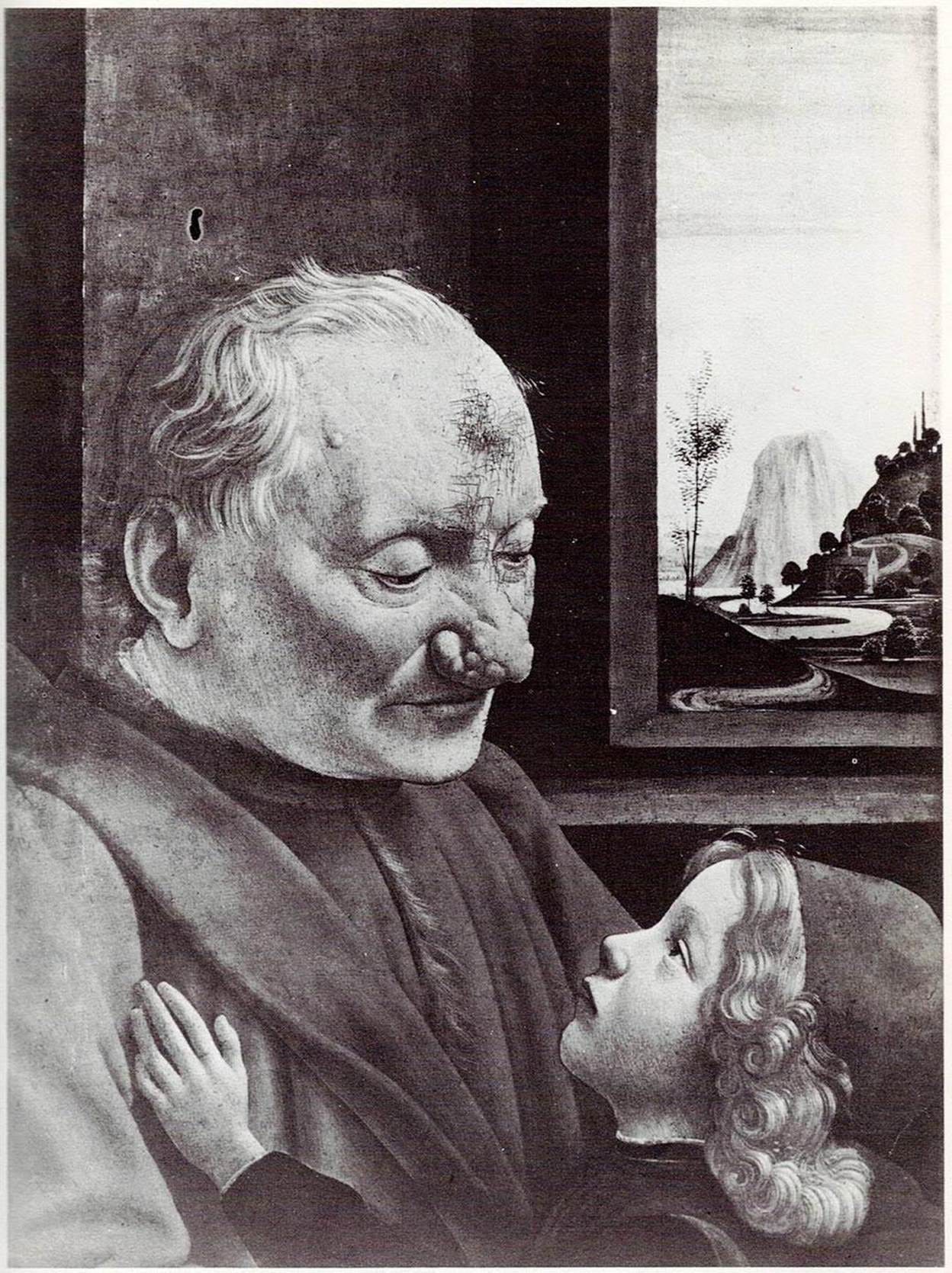
Domenico del Ghirlandaio. An Old Man and His Grandson
This fifteenth-century grandfather is, in one magnificent prolonged gaze, affectionate, reflective, loving, sad, and openly tender toward his grandson. It is almost a “maternal” gaze: undemanding, self-contained, deeply satisfied, utterly complete.
This grandfather’s look is one that little boys rarely see—or remember—on their father’s faces. This is a look that many fathers may bestow upon their sons only when they are asleep or only when they are very young.
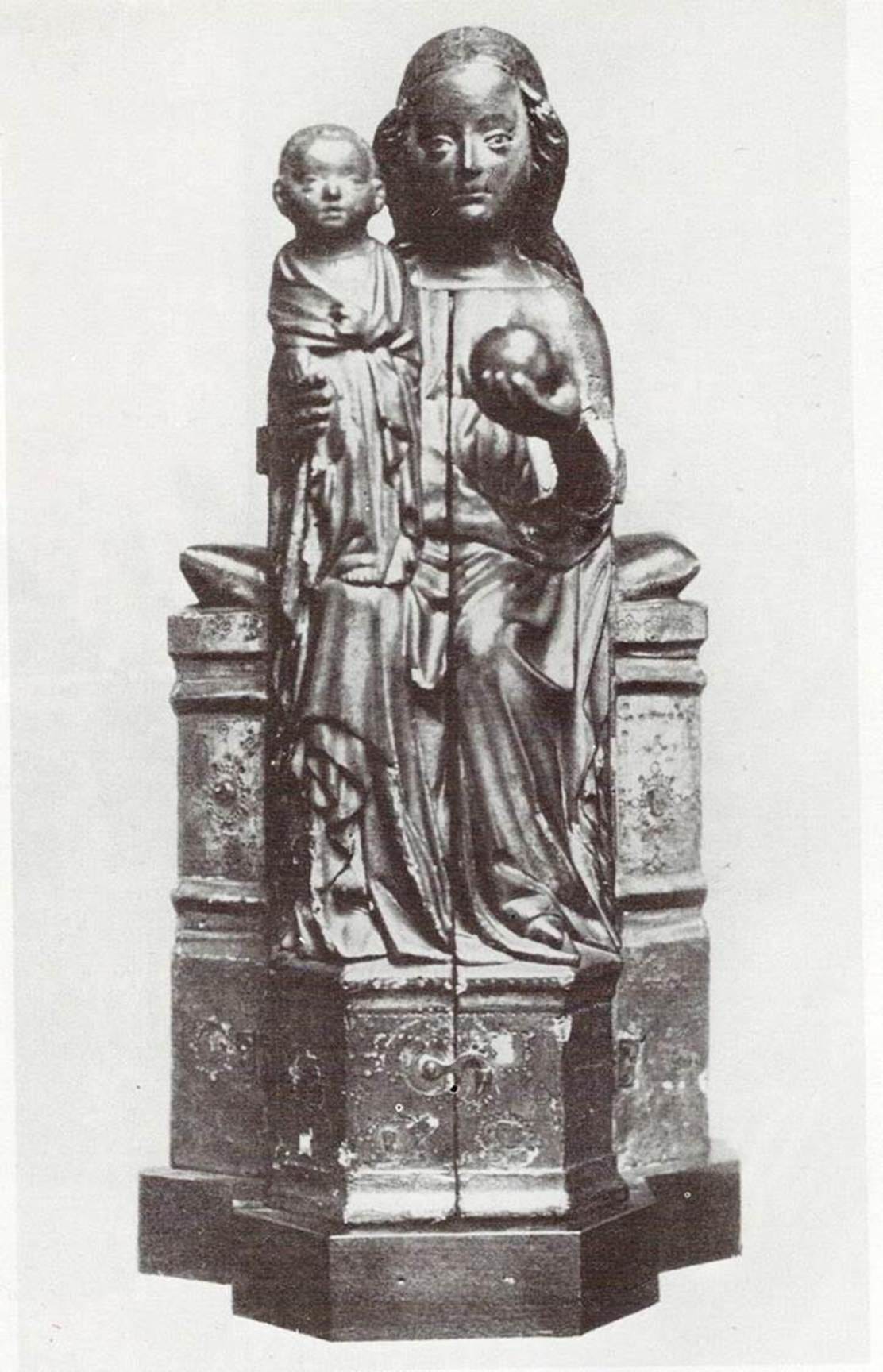
Unknown. Vierge Ouvrante—closed
Like Eve, the Virgin is holding the sphere, the apple, that represents the world—and woman’s creative dominion over the world. Unlike Eve, she has redeemed herself by not biting into the apple; unlike Eve, she has redeemed herself by producing a divine male child, a redeemer of other men, whom she holds as prominently in her right hand as she holds the uneaten apple in her left hand.
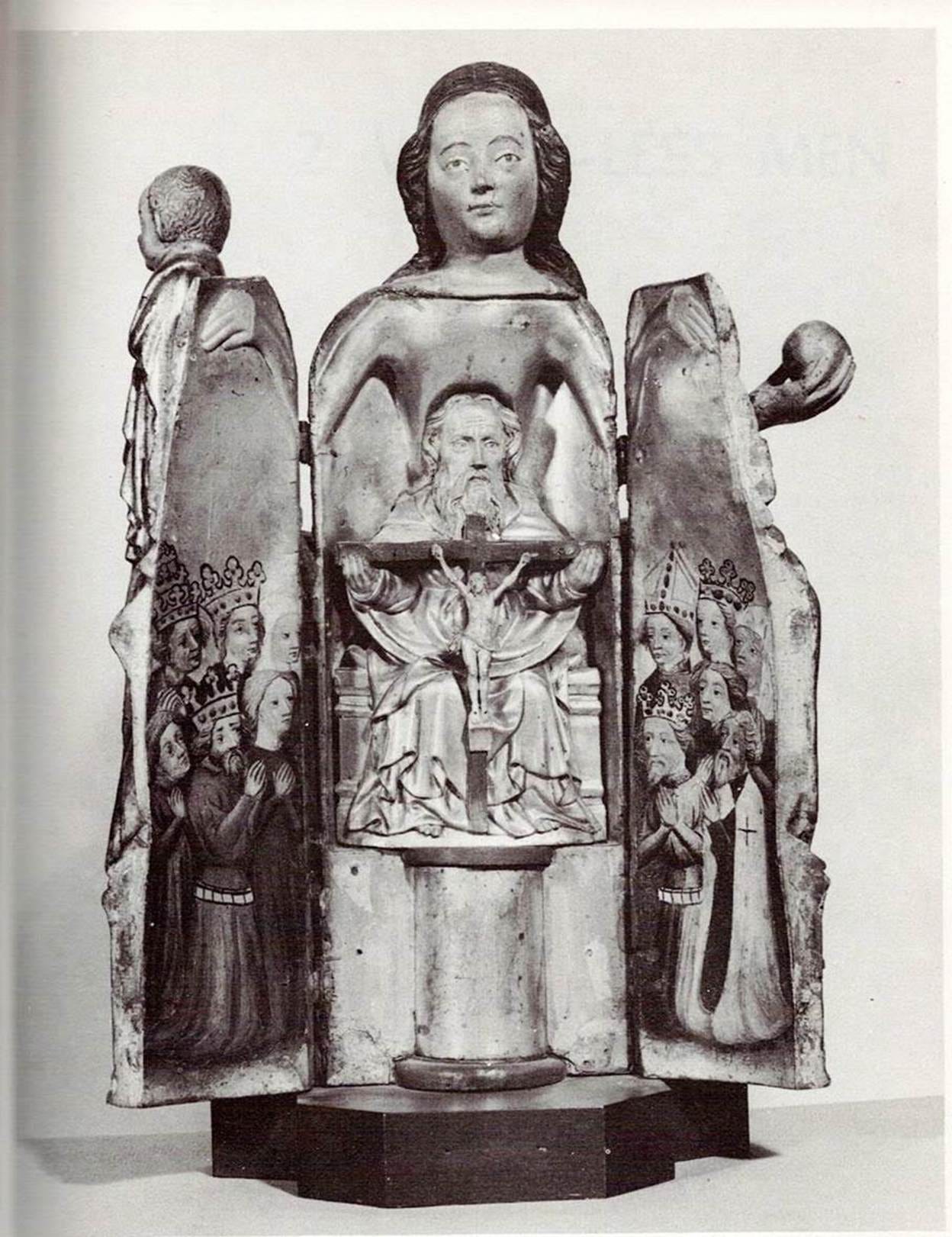
Unknown. Vierge Ouvrante—opened.
The terror of little boys forbidden their mothers, the anguish of womb-less men, the fury of dependency denied. How can men ever vanquish death without womb-men, without fathering children? How can men ever risk genuine intimacy with womb-men—when any one of them can turn into a forbidden Mother? Thus, do graybeards sit, frankly foolish, in the stomachs, in the very wombs, of young virgins: unlovely unicorns, trapped forever. And thus, do Fathers kill their sons: a contemptuous measure of womb-less man’s power over the womb.
Womb-less Men
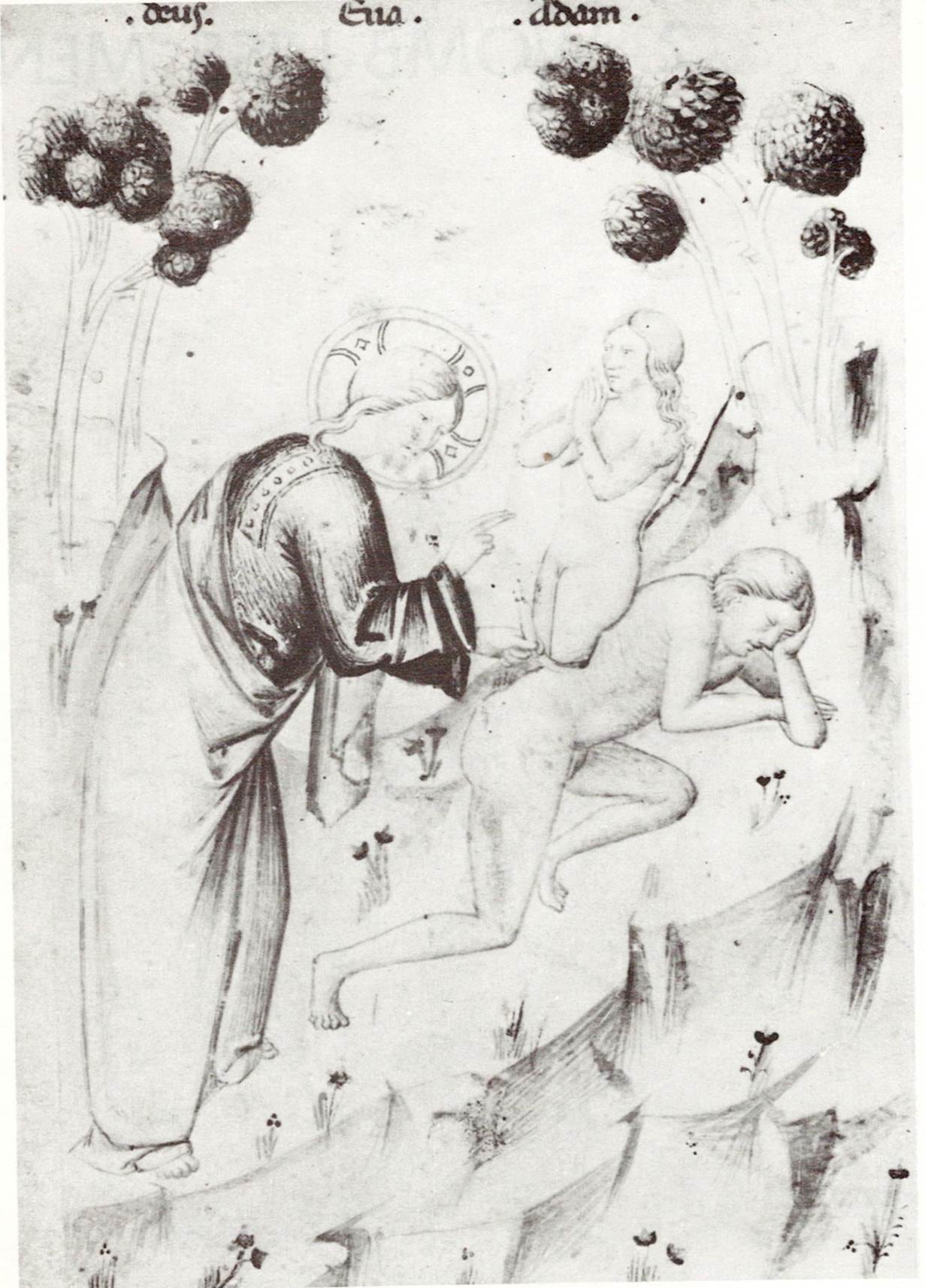
Anonymous. The Creation of Eve
The anonymous medieval illustrator of The Creation of Eve gives us the clearest image of the unconscious Creation Myth in most Judeo-Christian minds: that of a white male God who is miraculously creating the first man in a long line of Hebrew son-begetting fathers, and who is also creating the second Hebrew woman. According to myth, Lilith, who ran away from Eden, was the first woman.
Here we see Eve emerging out of a sleeping Adam’s body, already genuflecting, already a supplicant, already praying to the patriarchal God who conducts her actual and spiritual birth.
Freud: But only women have children.
Hans: I’m going to have a little girl. . . .
Freud: You’d like to have a little girl.
Hans: Yes, next year I’m going to have one….
Freud: But you can’t have a little girl.
Hans: Oh yes, boys have girls and girls have boys.
Freud: Boys don’t have children. Only women, only Mummies ve children.
Hans: But why shouldn’t I?
Sigmund Freud, “An Analysis of a Phobia in a Five-year-old Boy”
Couvade is the custom observed among many races that the of a new-born child lies in a bed for a certain period, eating only prescribed foods, abstaining from severe work and from the chase, etc., while his wife who has just given birth to a child carries on her usual occupation . . . . the idea of a lying-in on the part of the man.
Theodor Reik, Ritual: Four Psychoanalytic Studies
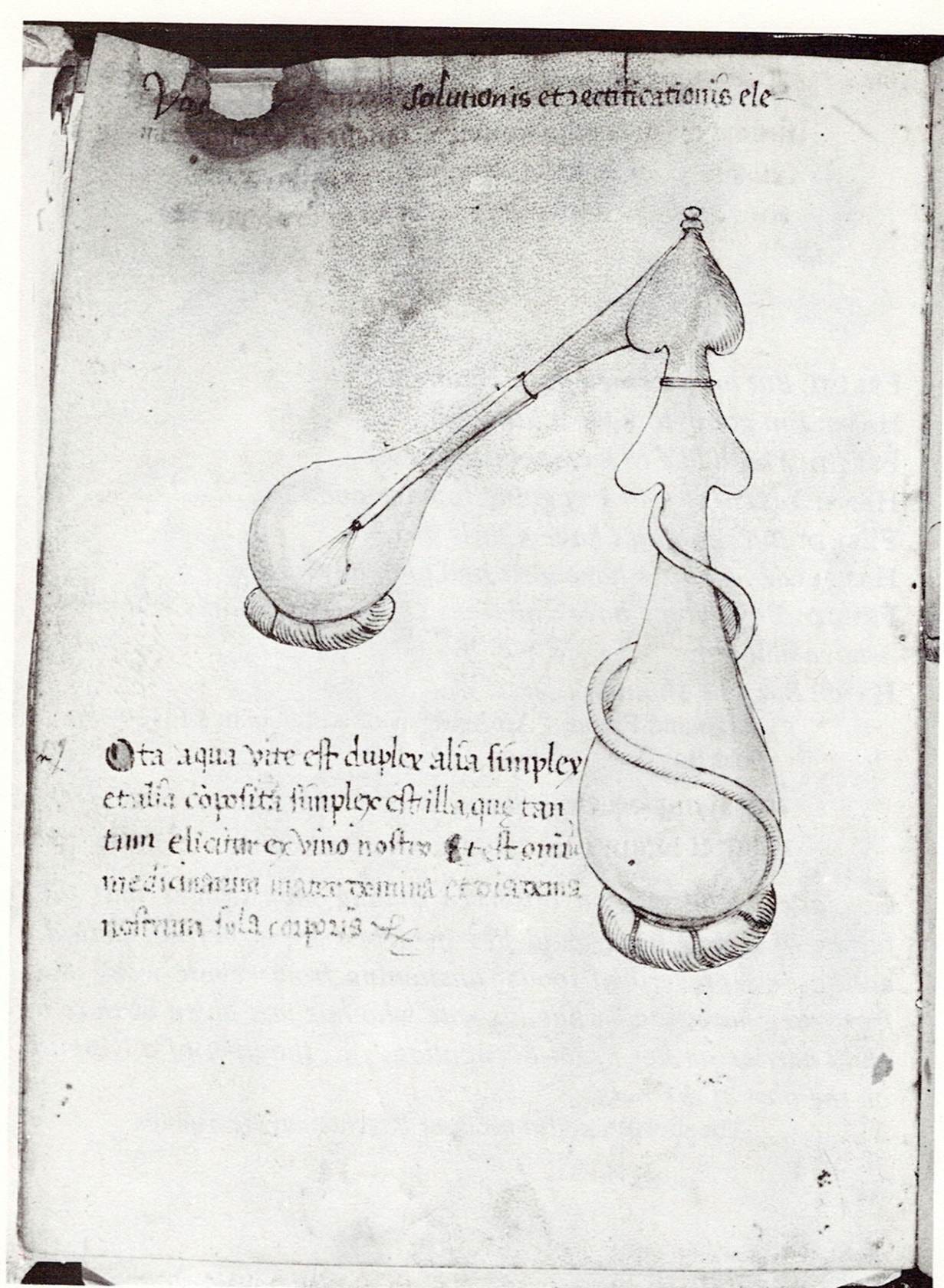
Unknown. Alchemical Vessel
To make something out of “nothing,” the way women seem to make new life out of nothing, naturally, effortlessly . . . or so it seems to men. Perhaps men had to invent a mysterious, invisible male sperm-deity to counterbalance the apparent ease with which female deities and/or real women produced children.
Male science, male alchemy, is partially rooted in male uterus envy, in the desire to be able to create something miraculous out of male inventiveness. However, men in science have carried us all to the brink of total planetary, genetic, and human destruction. Repressed and unresolved uterus-envy is a dangerous emotion.
How many men feel the little man? Longing for a king’s riches, a king’s daughter, a woman’s birthing magic? The miller’s daughter knows his name: Rumpelstiltskin, the man without a womb, the man whose swelling never lasts nine months, the man who disappears when his rage is spent.
Haunted and consumed by womb-envy, men invented alchemy. They dreamed of spinning something out of nothing: gold out of straw, new life out of old life.
Men created civilization in the image of a perpetual erection: a pregnant phallus.
Men said: “I have it. In the beginning, there was the Word. I will tell a fabulous lie so often and with such force that everyone will believe it. Soon, no one will even notice the deception.”
“Listen, children, here are the facts: Your real Mother is me—your Father!”
It was God, the Father, who gave birth to Adam, and Adam, the man, who gave birth to Eve, and God the Father who Created Christ.
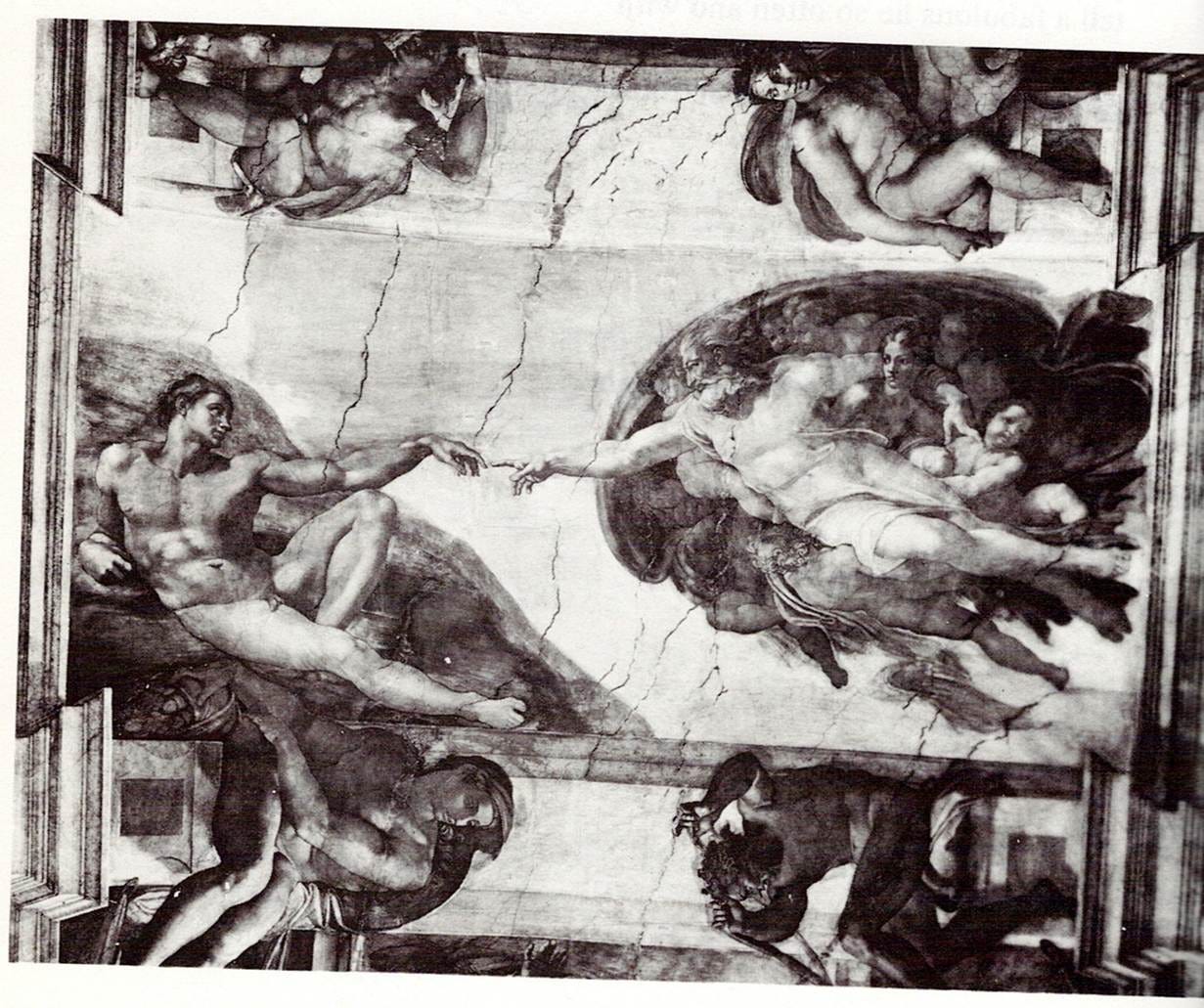
Michelangelo. The Creation
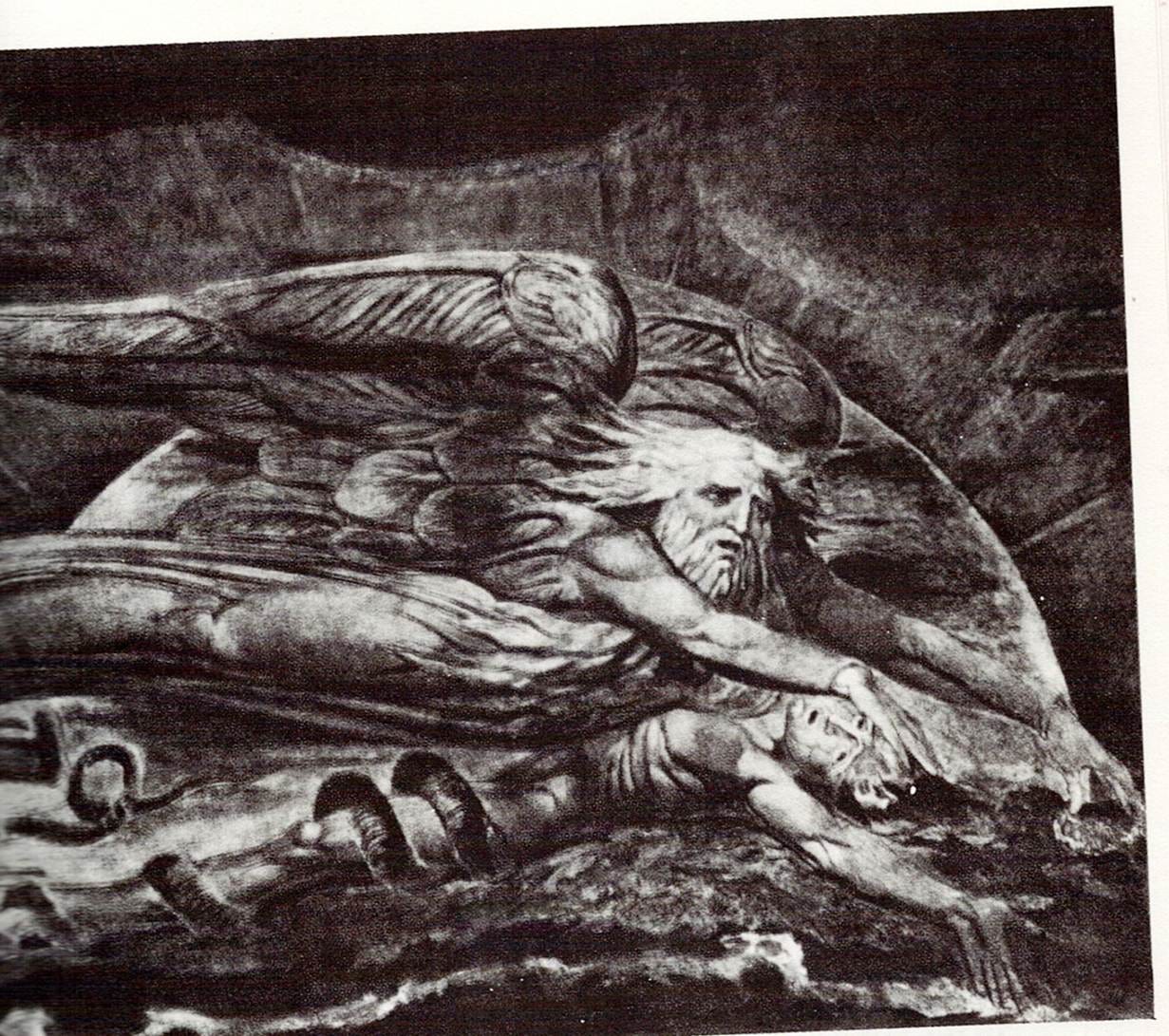
William Blake. Elohim Creating Adam
Michelangelo’s Creation and William Blake’s Elohim Creating Adam are both highly artistic expressions of male uterus envy.
Blake, a mystic poet, is depicting a Hebrew event, and is definitively, shockingly erotic in his depiction of the creation of Adam by God. Michelangelo, working out of a classical Greek homosexual tradition, as well as a Catholic anti-woman tradition, is less erotic, more subtle, more muscular, more “spiritual.”
Michelangelo’s Creation is so grand, so exquisite, so compelling, that one ever wonders: “How can a child be born without a woman :ming involved? In fact, where is that male God’s mother?”
ills is the great power of Art and Naming: it blinds us to the simplest_ most commonsense truths we know; it allows us, it commands us. to reject our own realities, to reject ourselves, in the belief that spiritual perfection is foreign to our personal, mortal consciousness.
Even the pagan male gods gave birth, but in manly ways--without losing any blood, without dying.
Zeus gave birth to Athena from his head, he used his head, he uttered the Word and she appeared, displaced upward from the dangerous lower regions to the lofty regions of the male eye and ear and brain.
Children, we will go further. We will circumcise ourselves, and shed blood, like women. We will make our own vow of flesh, our own divine covenant with God to show that we, too, are willing to sacrifice ourselves in order to perpetuate the race.
Is this why Jews are persecuted—cause, circumcised, they remind all men f their womb-envy? Or is it for refusing believe that one man’s sins can be shed by another man’s blood?
Eve’s real sin was in mothering Cain, the first man to kill his brother. That Pandora’s box could never be closed—no matter how many sacrifice-offerings, circumcisions, and conversions Jewish men performed.
And so men invented Mary, the woman who mothered the first man to redeem all his brothers, Isaac sacrificed, a more universal Joseph, the shedding of sacred male blood, so that it need never be shed again. A grand illusion. A male confusion over maternal blood.
Christian men insisted not on circumcision but on crucifixion. If female blood is needed to create human life, then male blood is needed to divinely redeem that human life. And His side shall be pierced at uterus-level, and we will worship this male death—as Eternal Life.
What do women give birth to anyway but corpses?
God’s bosom. In churches, people sing of it. The milk of our mother’s bosom is God-given, and the way of all mammals. But man’s maternality is a precious gift, a divine miracle, a freely shouldered burden: Our Savior’s blood.
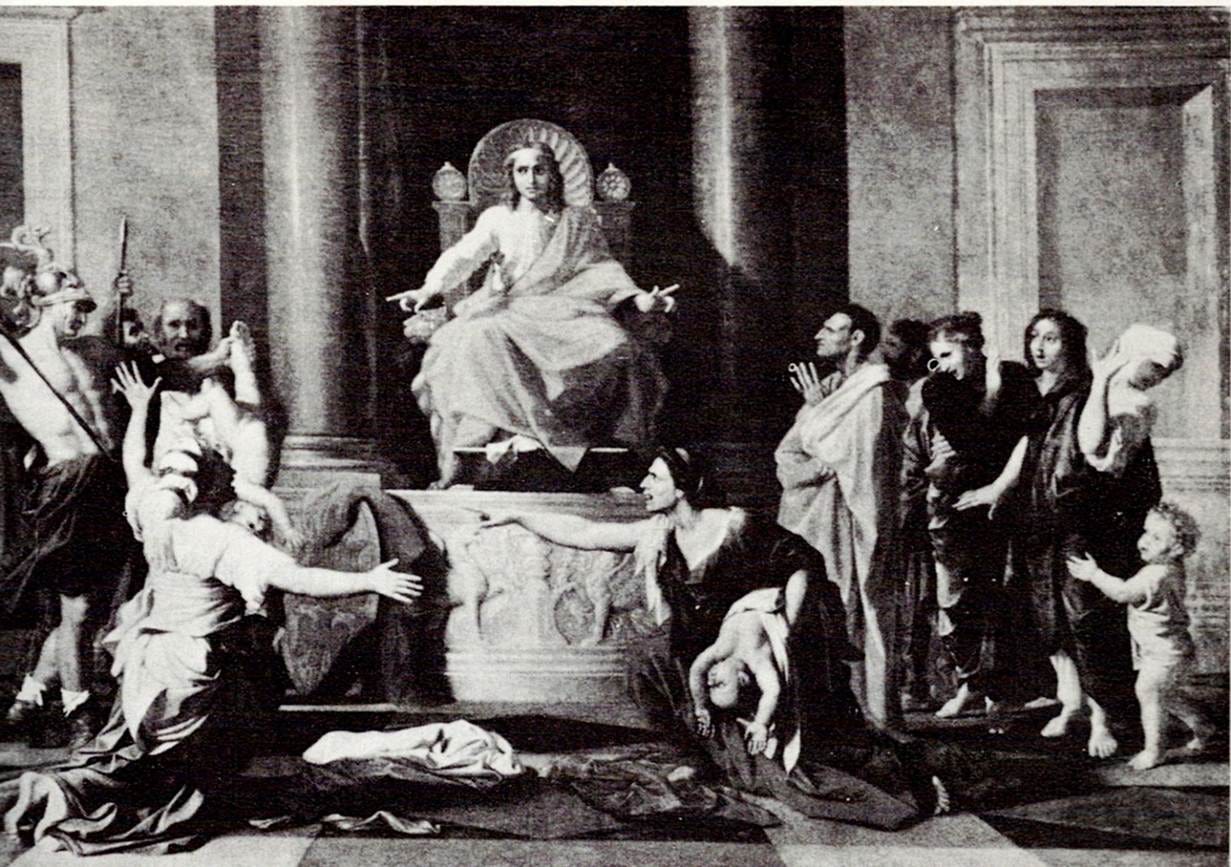
Poussaint. The Judgment of Solomon
The story of King Solomon’s wisdom is not merely a story about a mother’s love for her son—a love so great that she would even relinquish him to a female enemy in order that he live—although it is that story too.* More important, it is a story about the patriarchal need to demonstrate that fathers will be better mothers to sons than women are.
Thus, only male judges and male kings, inspired by a male Godhead, can be trusted to save a male child whom a woman might otherwise kill or allow to be killed. Only a male king like King Solomon is able to stop two prostitutes quarreling over an infant son; only a male king can still the vengefulness of women, at least one of whom would have seen a male child torn in two.
This famous tale of Solomon is purposefully deceptive, ironic, and instructive. Throughout the five books of Moses, one of the few —great” deeds allowed the Jewish foremothers was the saving of sons. Moses’ mother and his sister Miriam saved him from the Pharaoh’s death edict; Jacob’s mother Rebekah saved him both from his father Isaac’s wrath and from his brother Esau’s homicidal fury. Even during Solomon’s era, male children were being sacrificed by men to God, or ritually killed to sanctify temple cornerstones.
Yet the power of myth is so great that we remember the “maternal” objectivity and wisdom of Solomon, and the viciousness of women denied ownership of the children they want.
* The female “enemy,” by the way, is a woman who has just given birth, and who has accidently smothered the child during the night. Possibly, this woman was in a state of demented grief and guilt when she stole the other woman’s newborn child.
Listen, children: The Church is the true Mother of us all. Naming is all. Unbaptized, you cannot get into heaven. Only men in skirts can turn boys into men.
Listen, children: Modern medicine is the midwife of us all. Science is all. Only men in aprons can carve up the female mysteries without risking death.
From behind their veils, from behind their curtained balconies, the womb-men, set apart, silently watch this elaborate procession of velvet and gold: the Majesty of Couvade.*
The womb-men are content. No longer need they hide their sons among bulrushes, among strangers, beneath animal skins or on the tops of mountains. Now, the womb-less men, the Fathers, will protect them.
*In orthodox Jewish synagogues, women traditionally sit apart from the men, usually in balconies and often behind screens or curtains, so they will not disturb the men at prayer.
Dressed by her fathers in crimson, and stiff with silver, she is borne aloft on their shoulders: the Daughter of Man. Singing “Holy, holy, holy,” her fathers bring her to the sacred Ark. Slowly they undress her and, with great ceremony, spread apart her thighs—the scrolls of the Torah—and enter the Kingdom of Queenly Heaven.
High above, the womb-men throw almonds, raisins, kisses.
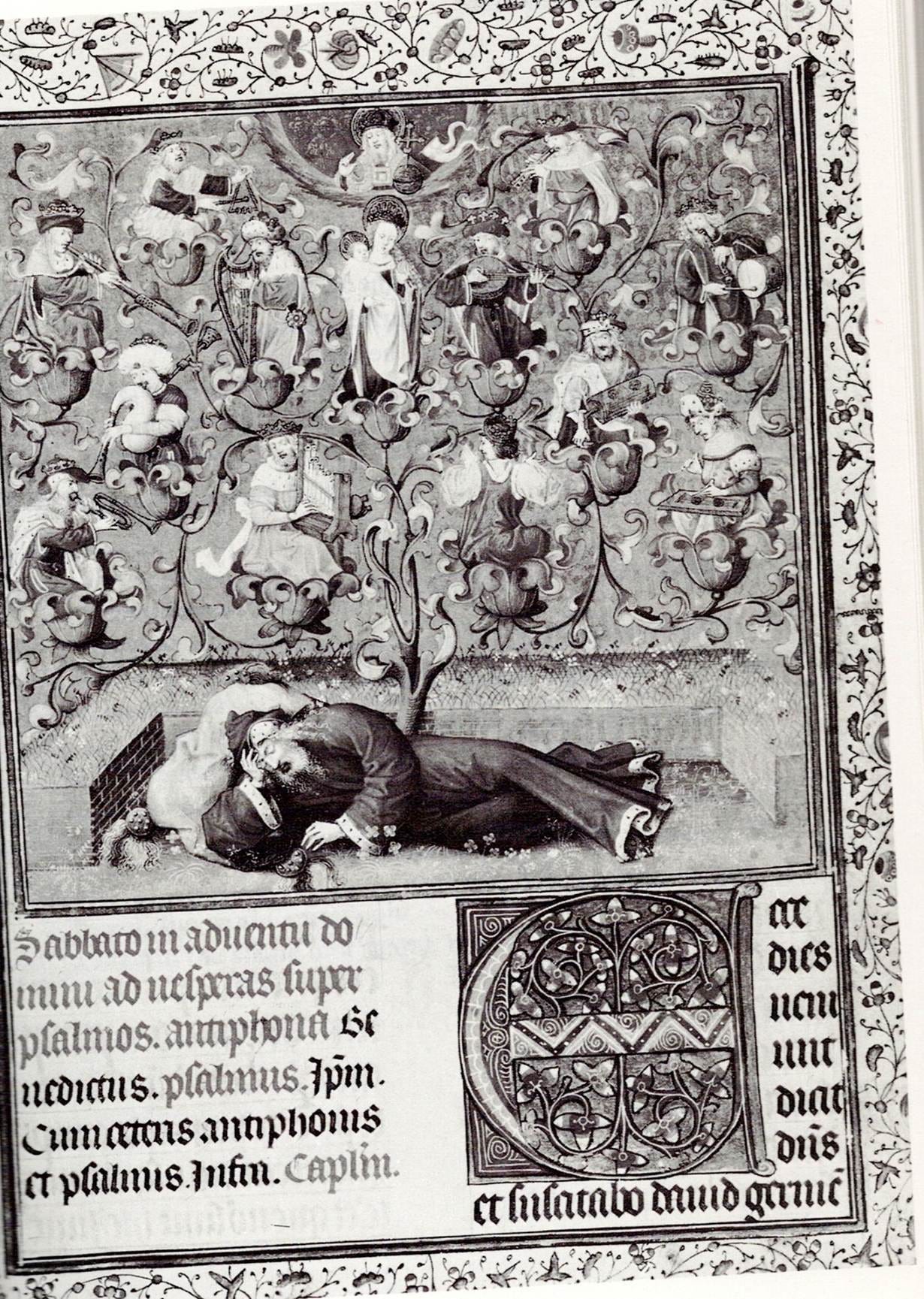
Unknown. The Tree of Jesse
Circumcision, Crucifixion, the Kingdom of Heaven—yet Kings and warriors still needed blood sisters to shed the only kind of blood men value: the blood of virgins, the blood of childbirth.
Peace treaties between men were best signed in the magic flesh of child brides.
Show us the blood,
Show us the child,
and then, we, the grandfathers, the uncles, the kinsmen, will put our weapons away.
Still, men did not believe their own ruse. And so they created money. Horapallo, an ancient theoretician, proclaimed that
The scarabeus [is] a creature, self-produced, being unconceived by a female. When the male is desirous of procreating, he takes the dung of an ox and shapes it into a spherical form like the world.
In Egypt, the world’s first coin was minted in the shape of a scarab beetle.
Money: from scarab beetle to King’s portrait, the coin is sacred to men. It is men’s way of reproducing and expanding themselves, of extending their own lifelines. Priests and Kings had their very own likenesses engraved on coins: an endless number of self-reminders, a genetically metallic miracle.
Money fulfills the alchemists’ desire to turn straw into gold—but with no need of millers’ daughters; money fulfills the hero’s search for the Golden Fleece—but with no need of love-starved queens who expect you to consort with them forever.
Poor King Midas was a dead man without a woman. Whatever he touched turned to useless gold—without a King’s daughter for wife, without woman—the connection between power and ambition, the connection between king and hero, the connection between father and son.
Until money invented machines. Now, technological Paradise is within male erotic grasp. Astronauts, both communist and capitalist, lumber on the moon like pregnant women, while scientists on earth try to create life in baby-blue test tubes, the color of death, the color of boys.
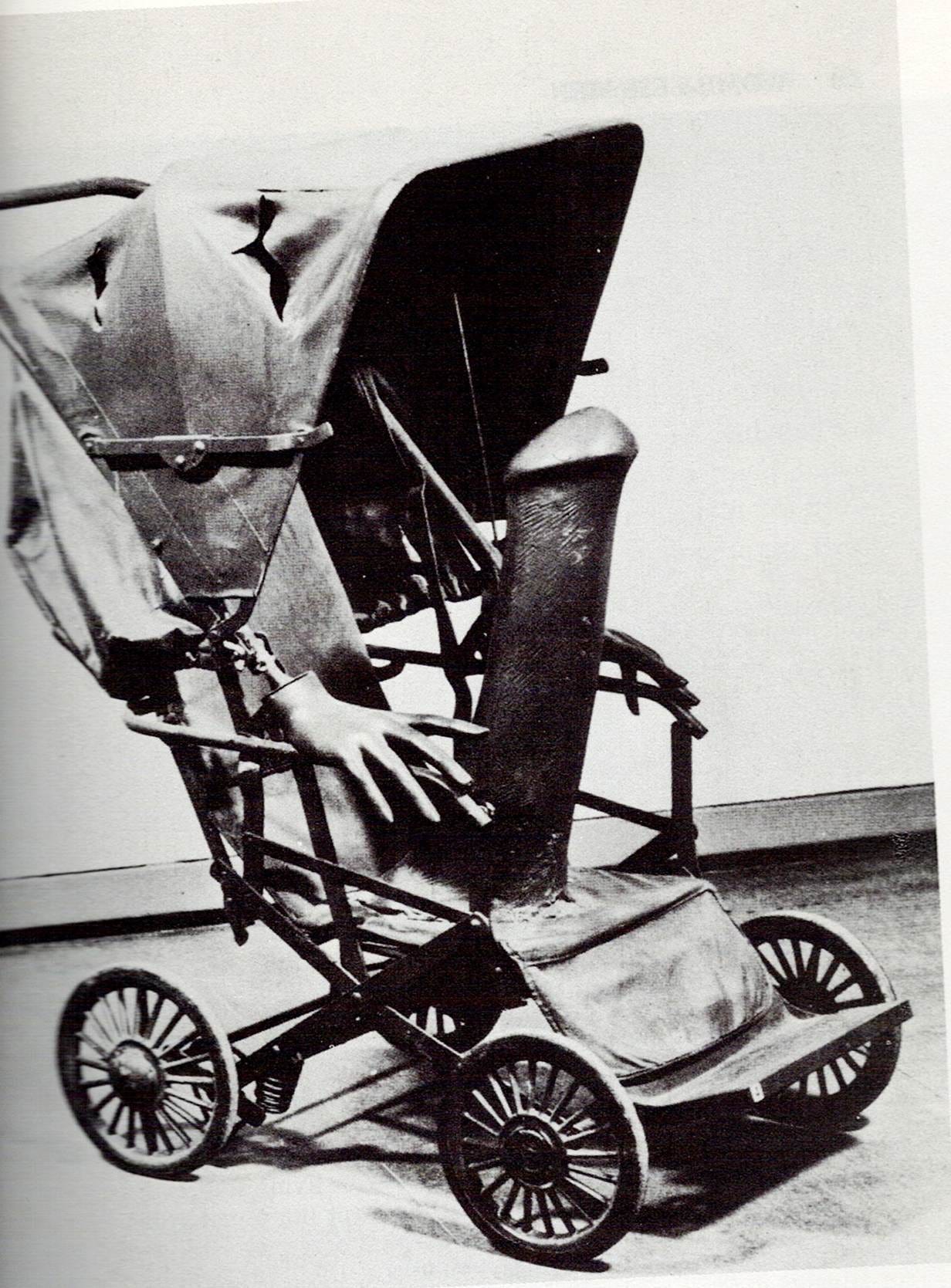
Hans Peter Alvermann. Rolling into the Future Without Love or Sorrow
In this sculpture by the German Alvermann, we see a furiously future of male uterus-envy: not only is Woman as Mother totally absent, but the phallus has even destroyed the object of its uterus-envy. There is no baby in the baby carriage. In its place is a large phallus.
When I see a sculpture like this I am convinced of the dangers of genetic engineering and of test-tube babies. I am reminded of male scientific excesses, which, stemming from uterus-envy, are willing, paradoxically, to sacrifice many people to achieve the larger End.
It is no accident that books of pornographic or erotic art are also the of many expressions of womb-envy. Dr. Margaret Mead, in a public dialogue with me, noted that “men laugh at sex and women discuss life and death.”
In museums, in marble silence, women are hanging, beautifully clothed and beautifully naked, painted by great artists who loved the female body. Strange, how few of them are pregnant.
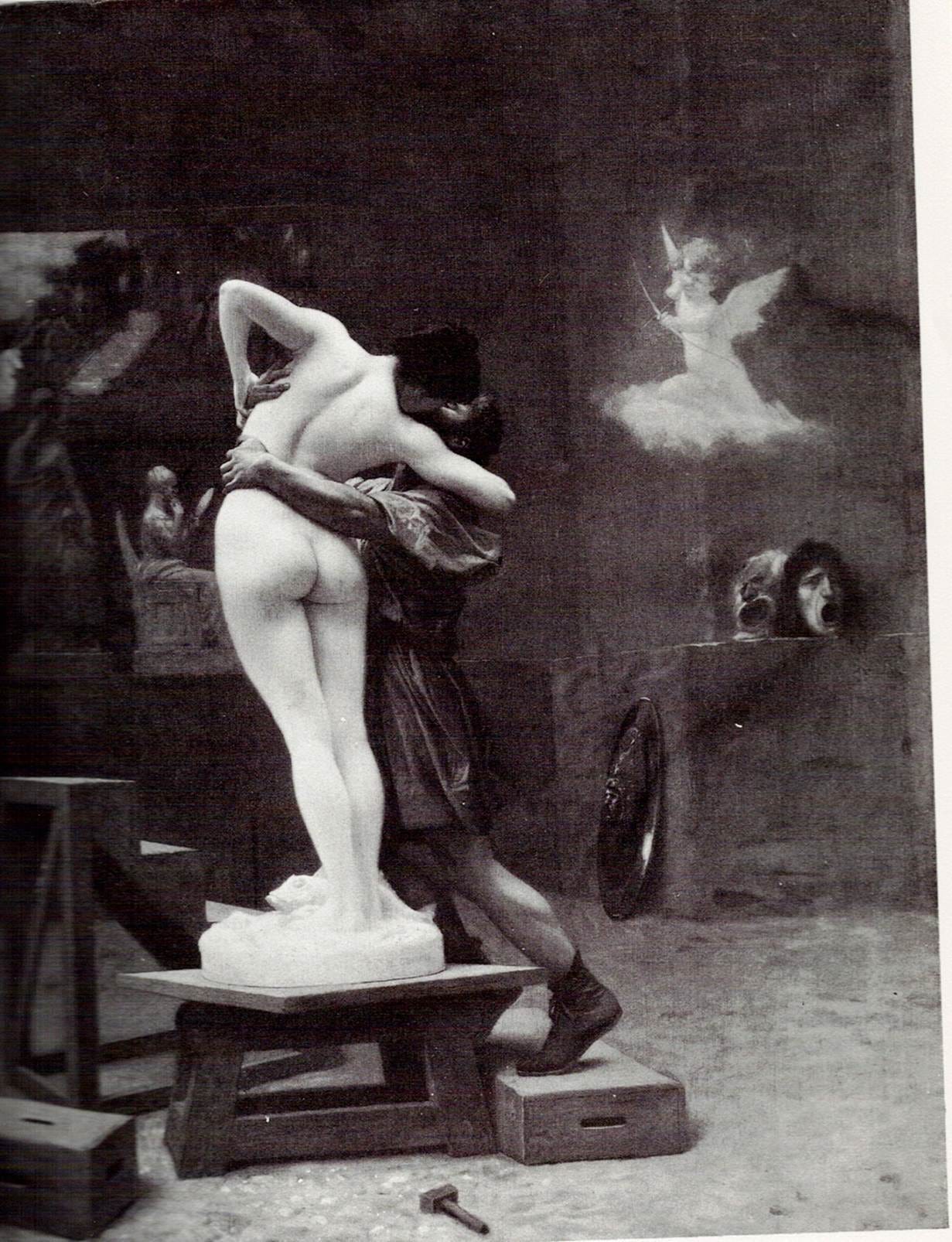
Jean Leon Gerome. Pygmalion and His Statue
According to myth, the sculptor Pygmalion lived on the island of Cyprus. He was devoted to his art, and despised the “sexually wanton” women among whom he lived. Pygmalion was a misanthrope who talked to no one and made perfect sculptures. Once he made an ivory statue of a woman so “beautiful” that he fell in love with it. The Goddess Aphrodite, after turning the “sexually wanton” women into rocks, took pity upon Pygmalion and, as he was embracing the cold ivory flesh of his statue, Aphrodite turned her into a live or living statue.
How far removed in significance is this from the creation by men of robot-zombies as “perfect wives”—as in the recent Hollywood film The Stepford Wives? Or the transformation of Eliza Doolittle by Professor Higgins in My Fair Lady, a musical based on G. B. Shaw’s dramatization of the Pygmalion myth?
The mindless and joyful prominence this excellent musical has enjoyed in America suggests that men needed to be reminded that, despite the post World War II baby proliferation, they alone would make or try to make women’s reproductions “perfect”—especially to suit their own cantankerous and bachelor-like needs!
From email: "Phyllis!! This is amazing, beautiful, haunting. Can’t you resurrect this book and republish it in a new ed? Hasn’t its moment arrived?
Please please consider this.
In awe..."
From Tamara Weissman, via email: "Omg I started to read it because of the mention of my mother - who of course was, as always, right - and continued to read the whole thing because it’s absolutely brilliant. Have many thoughts."